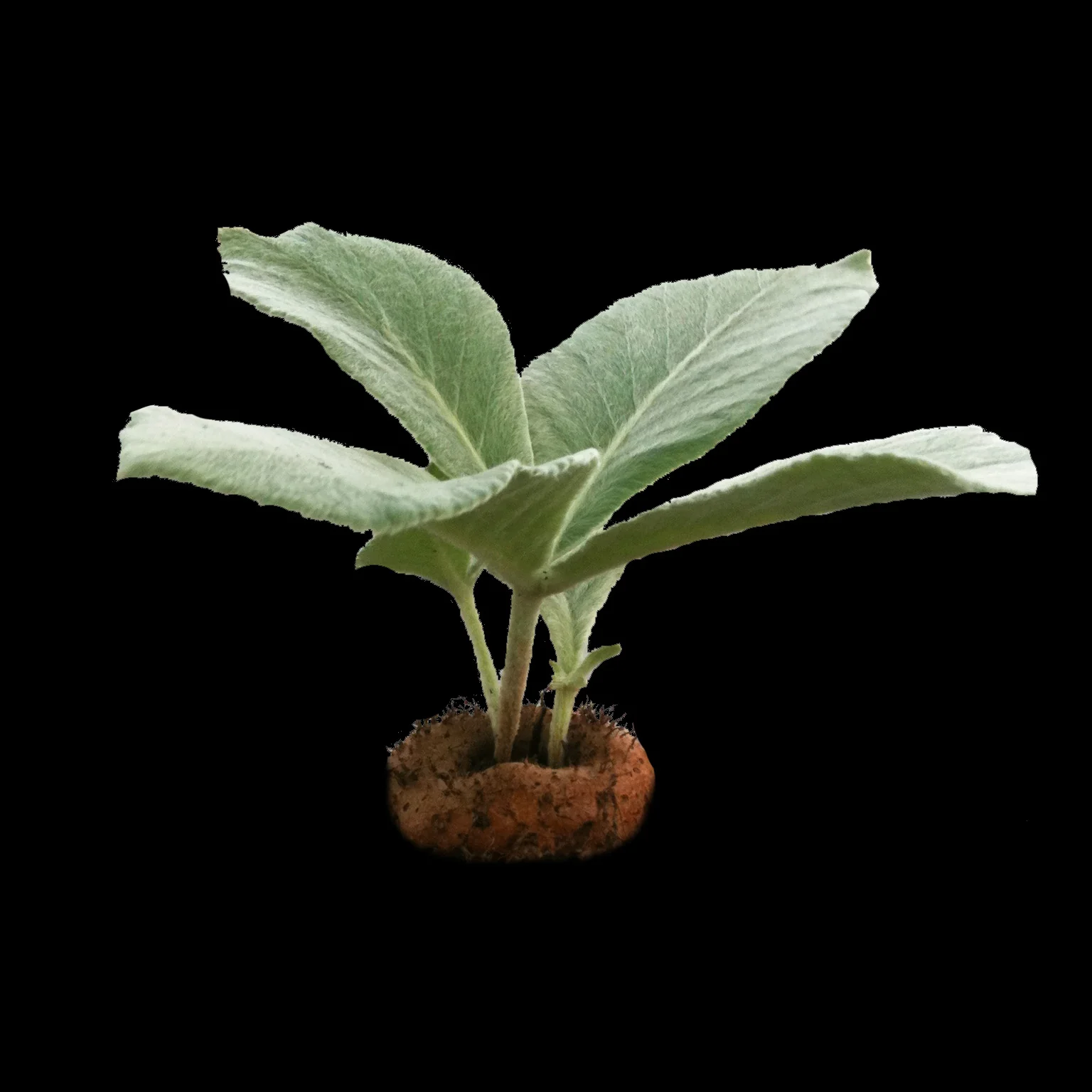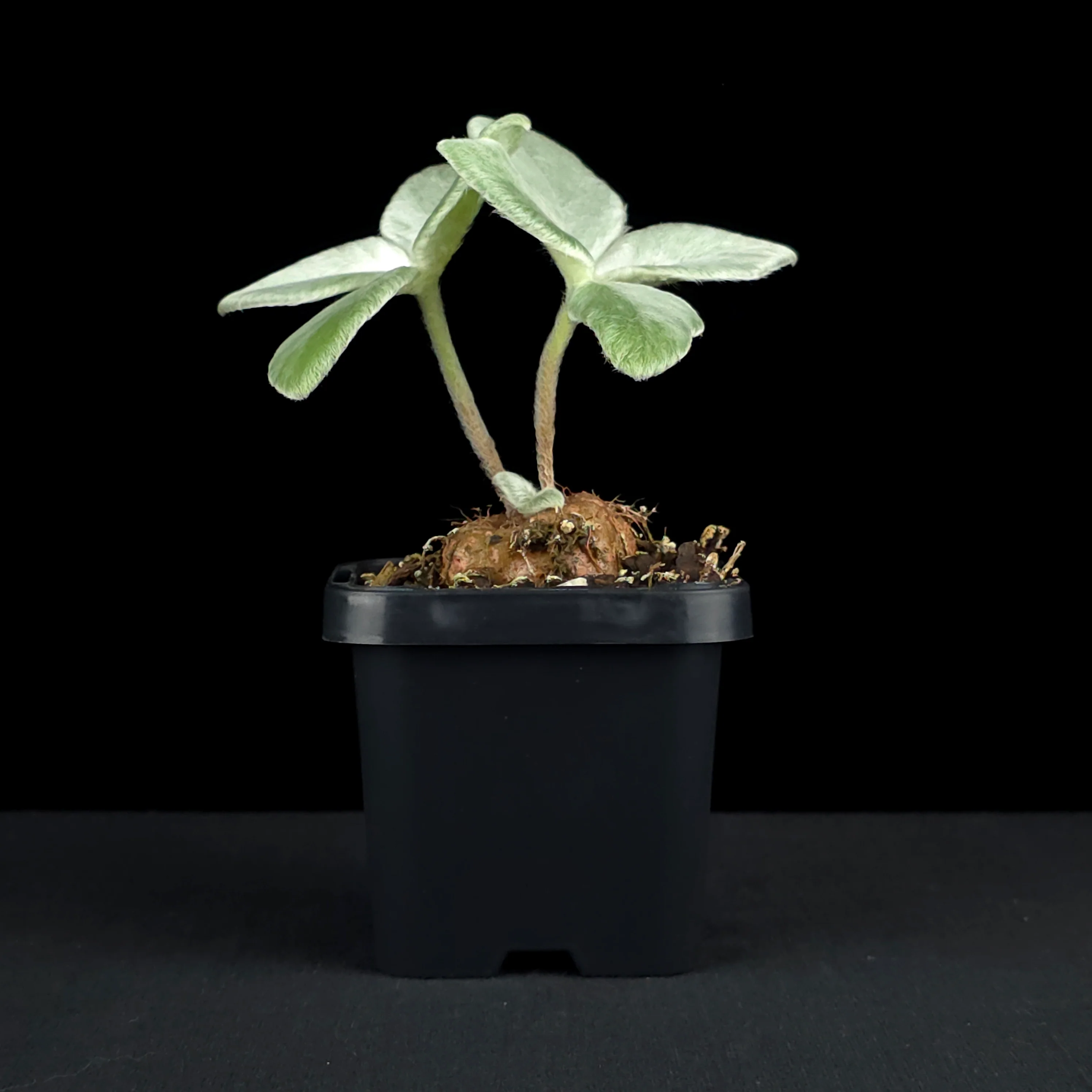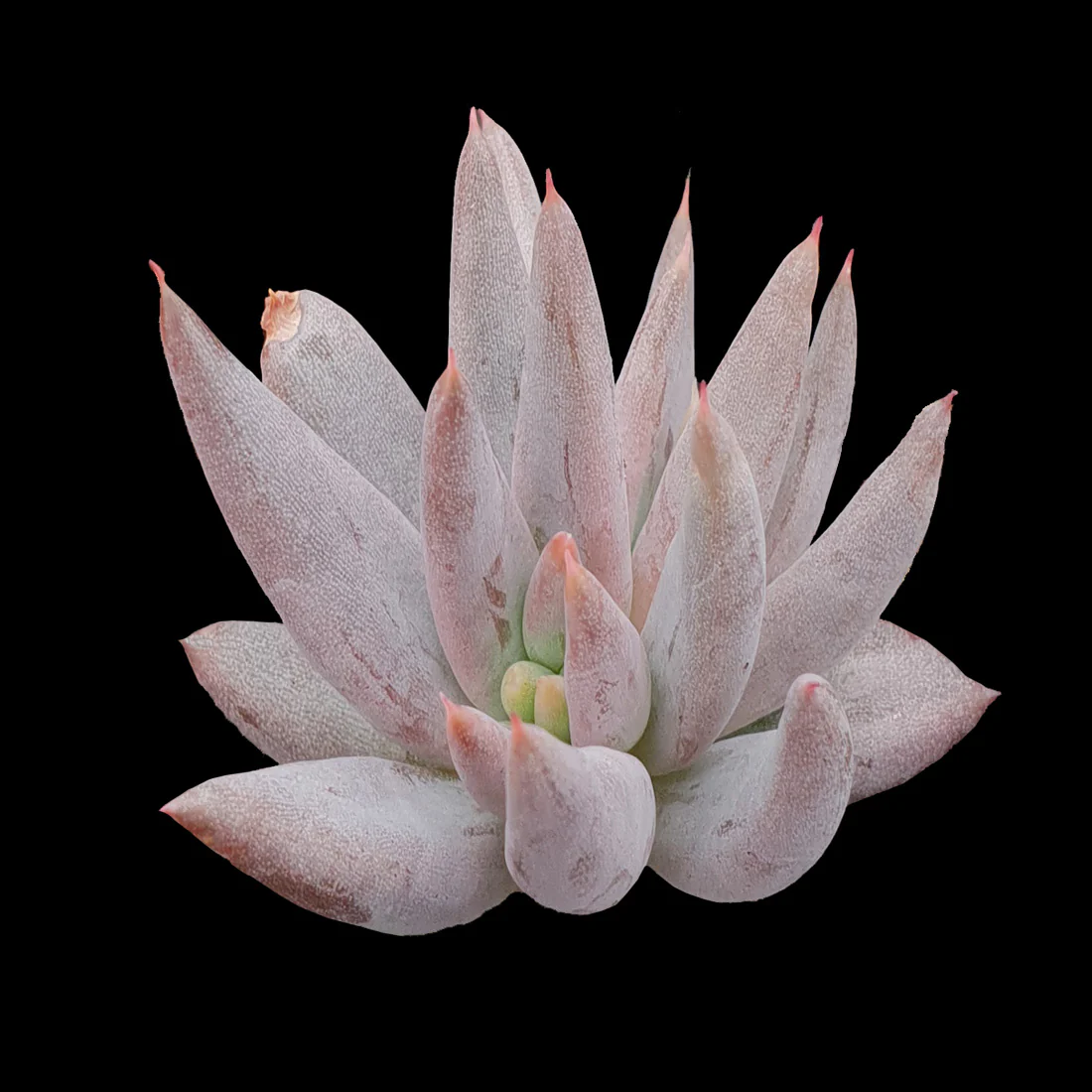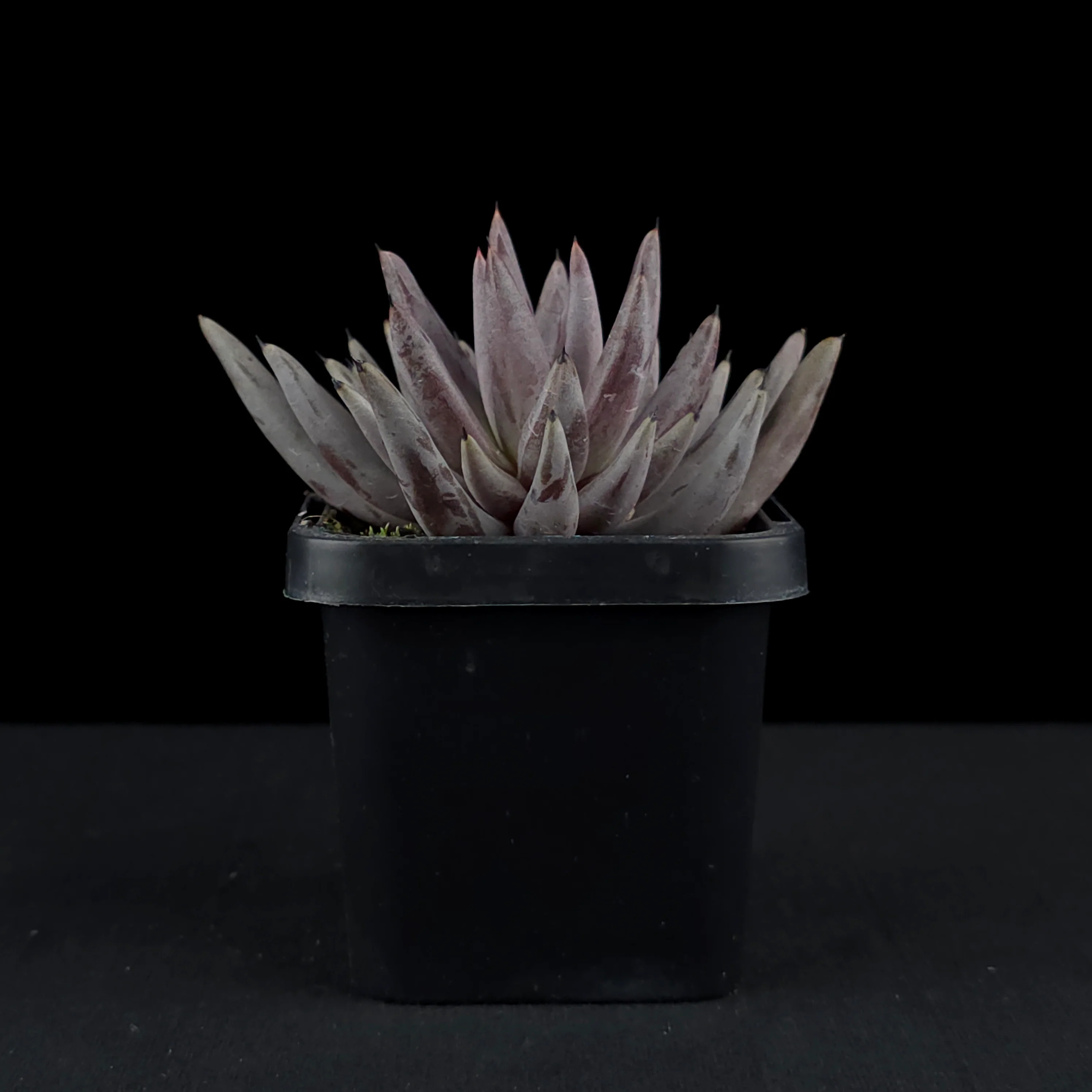
Ledebouria socialis Variegata
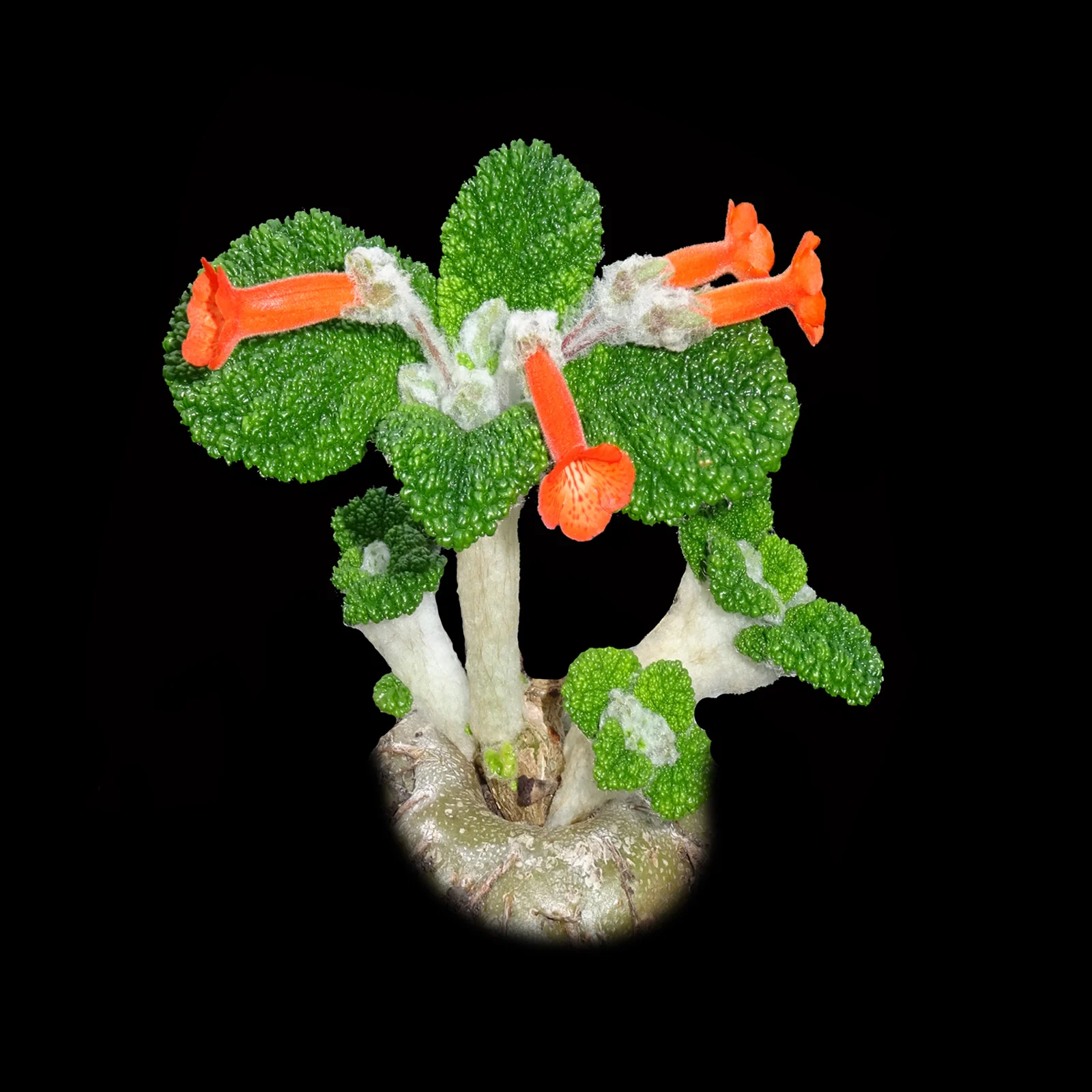
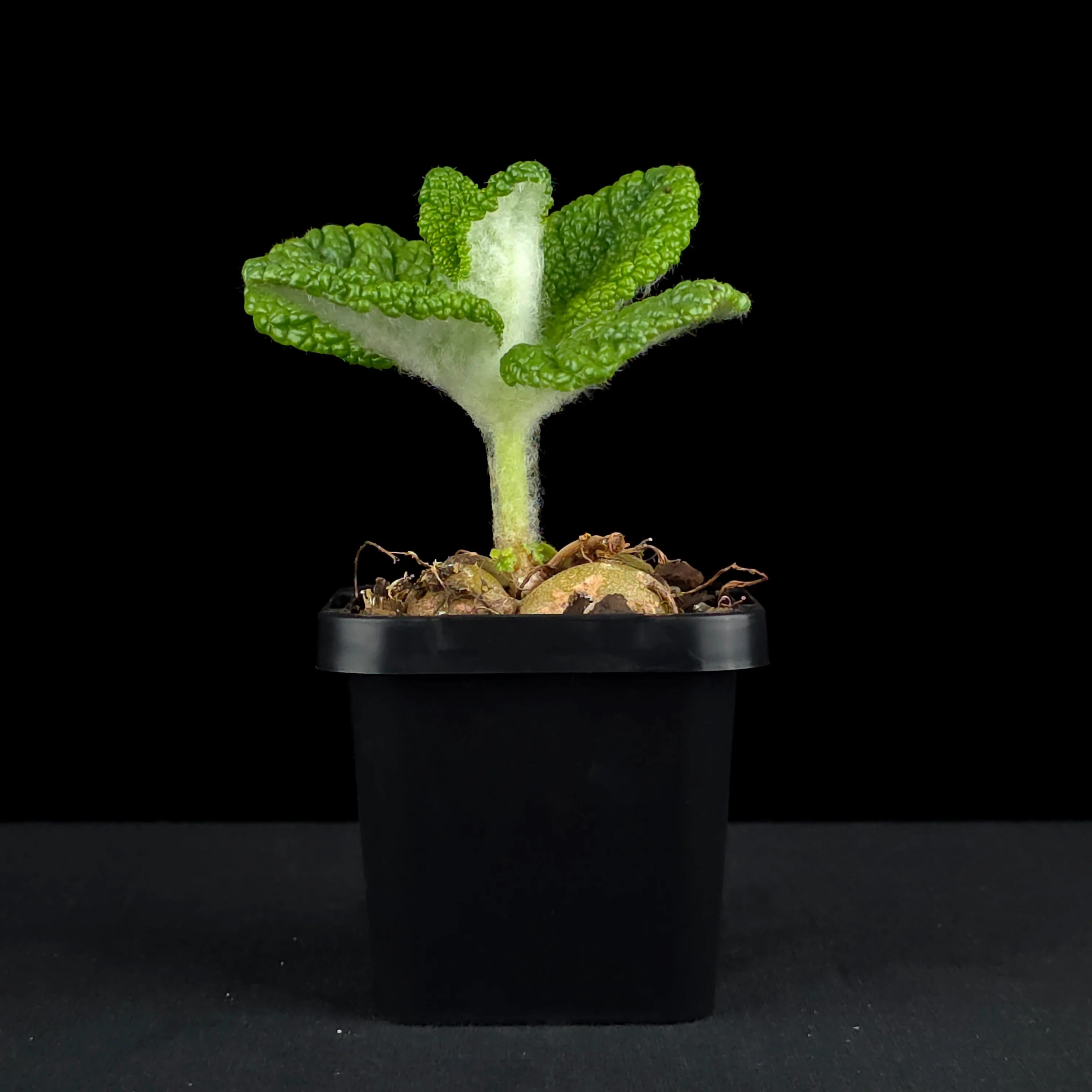
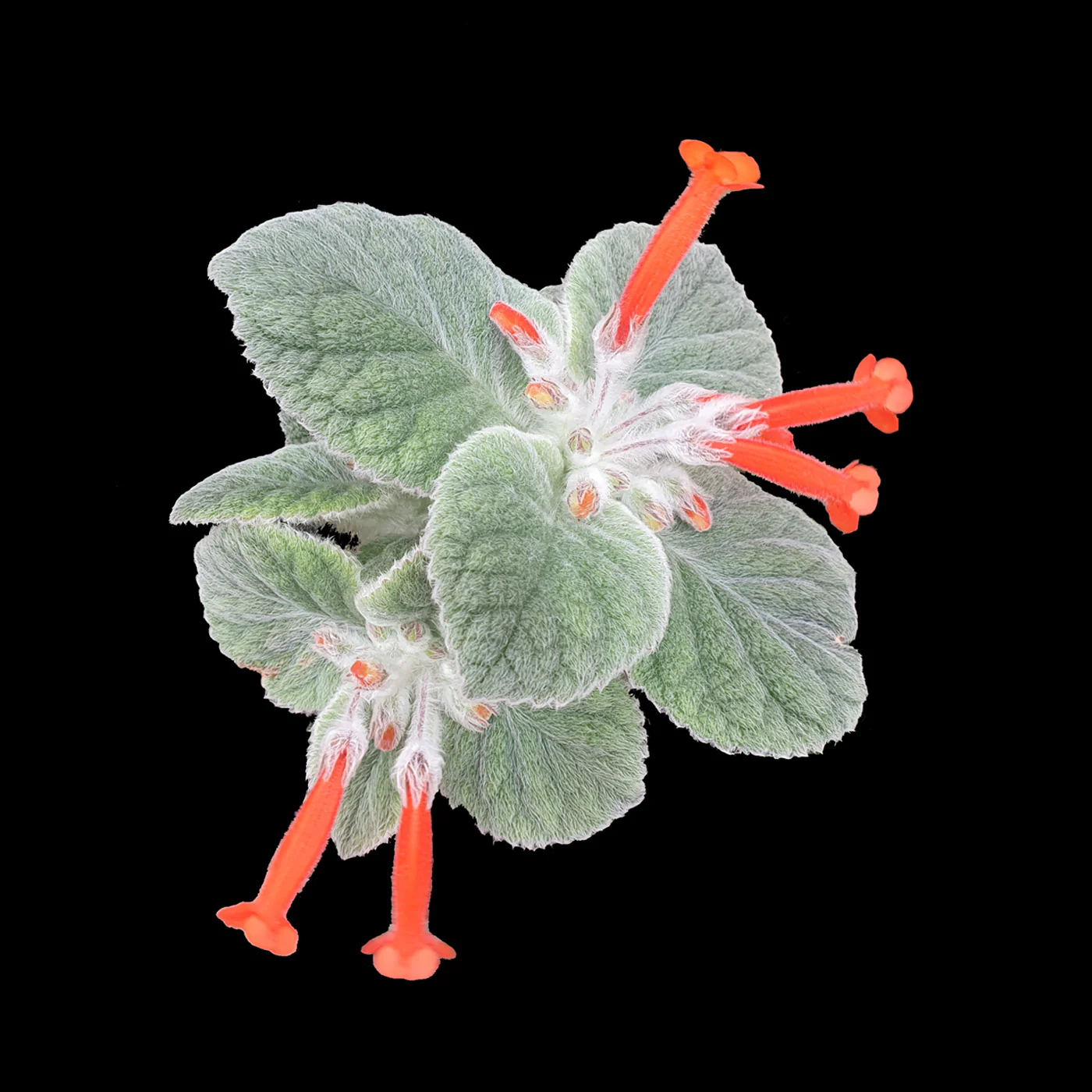
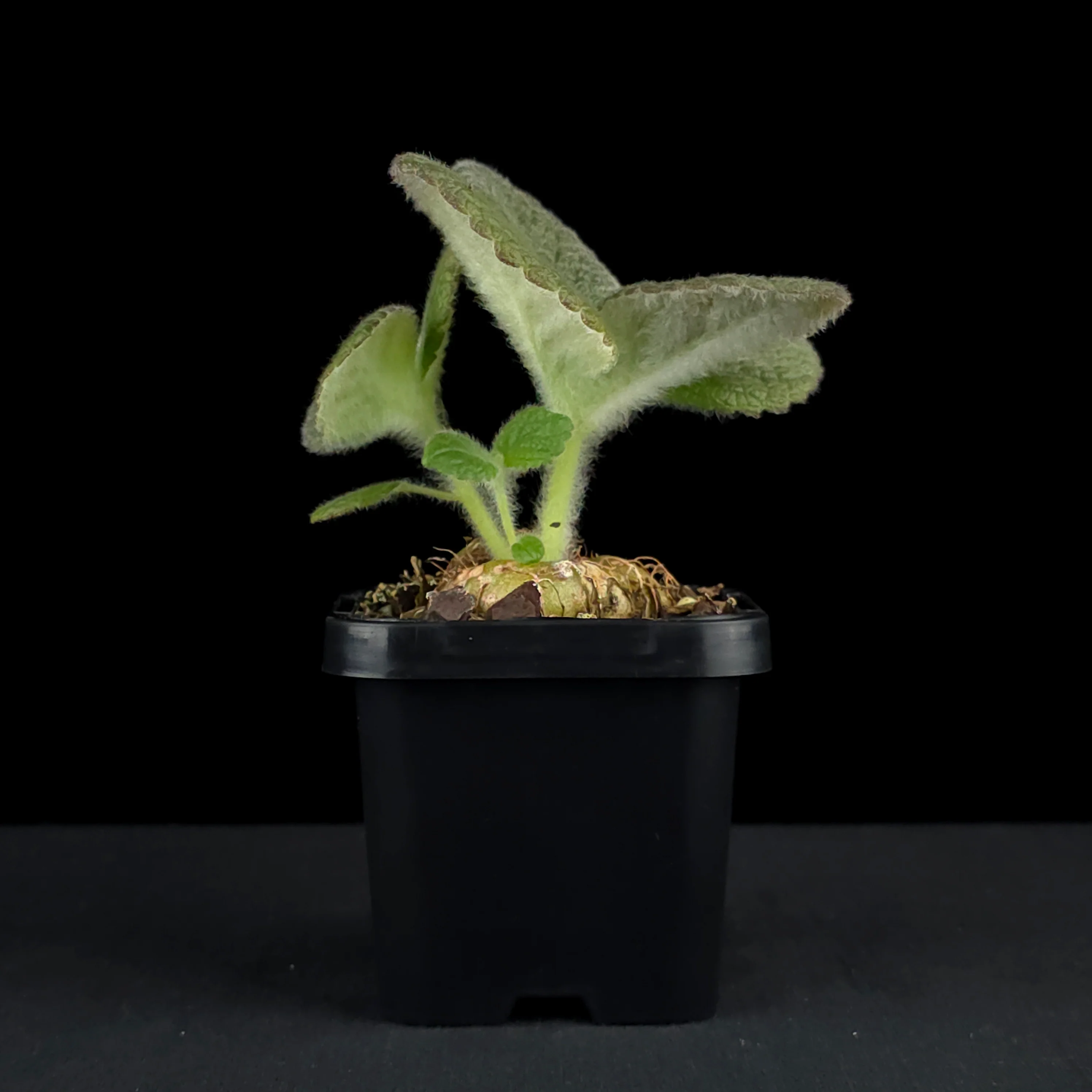
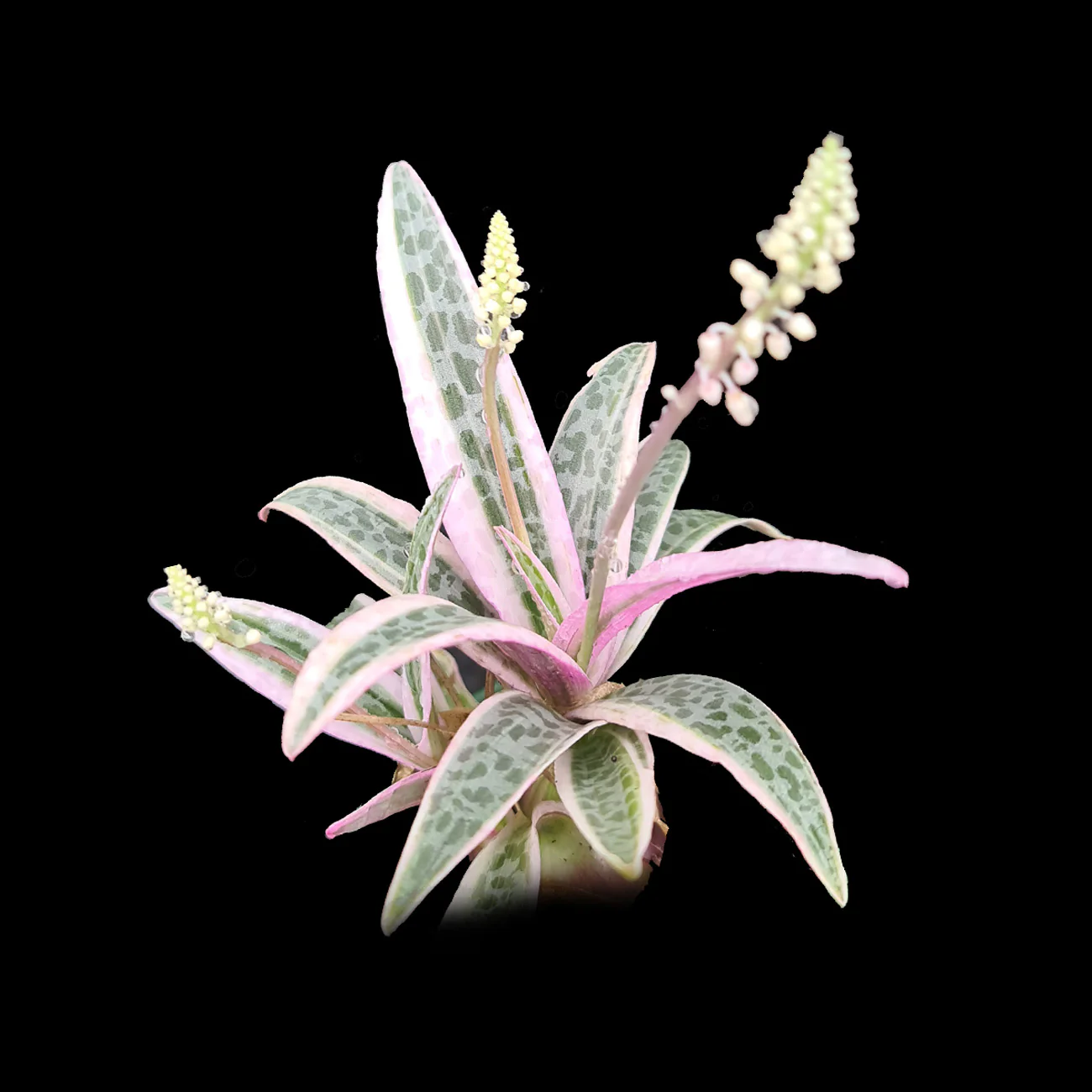
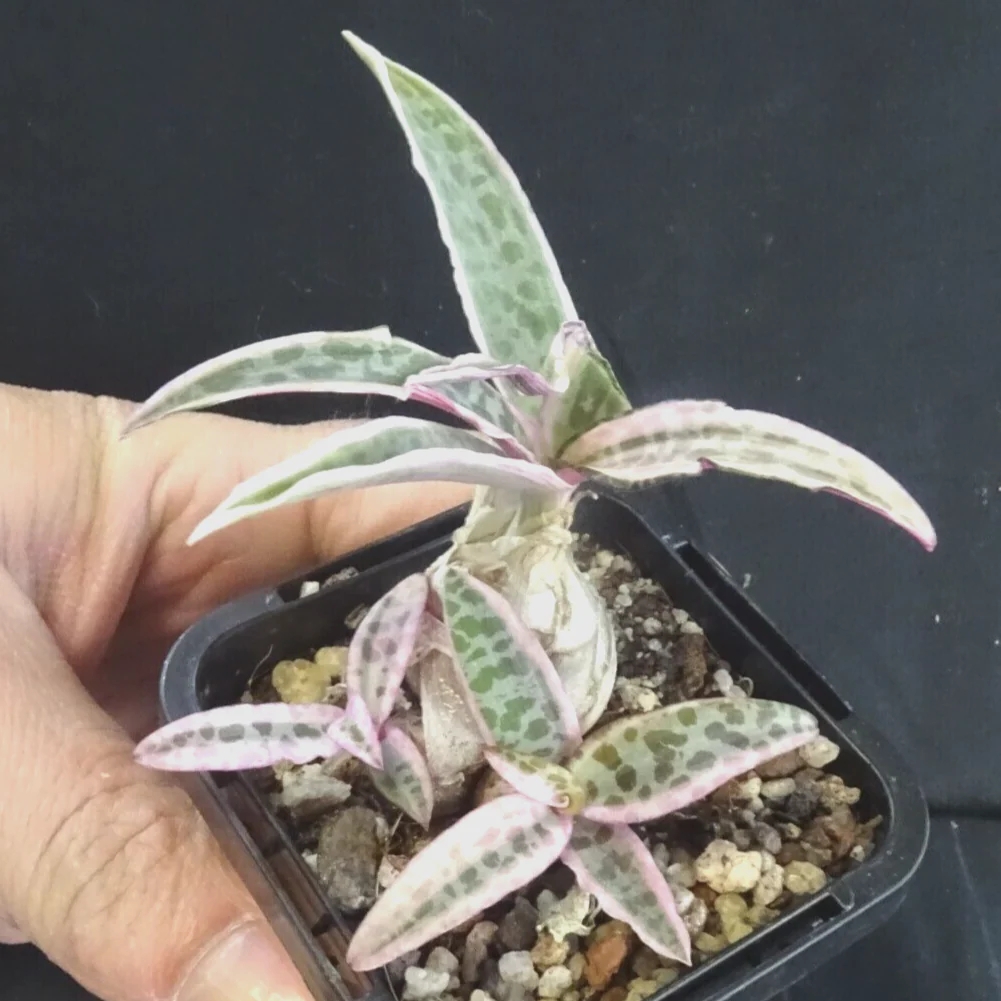
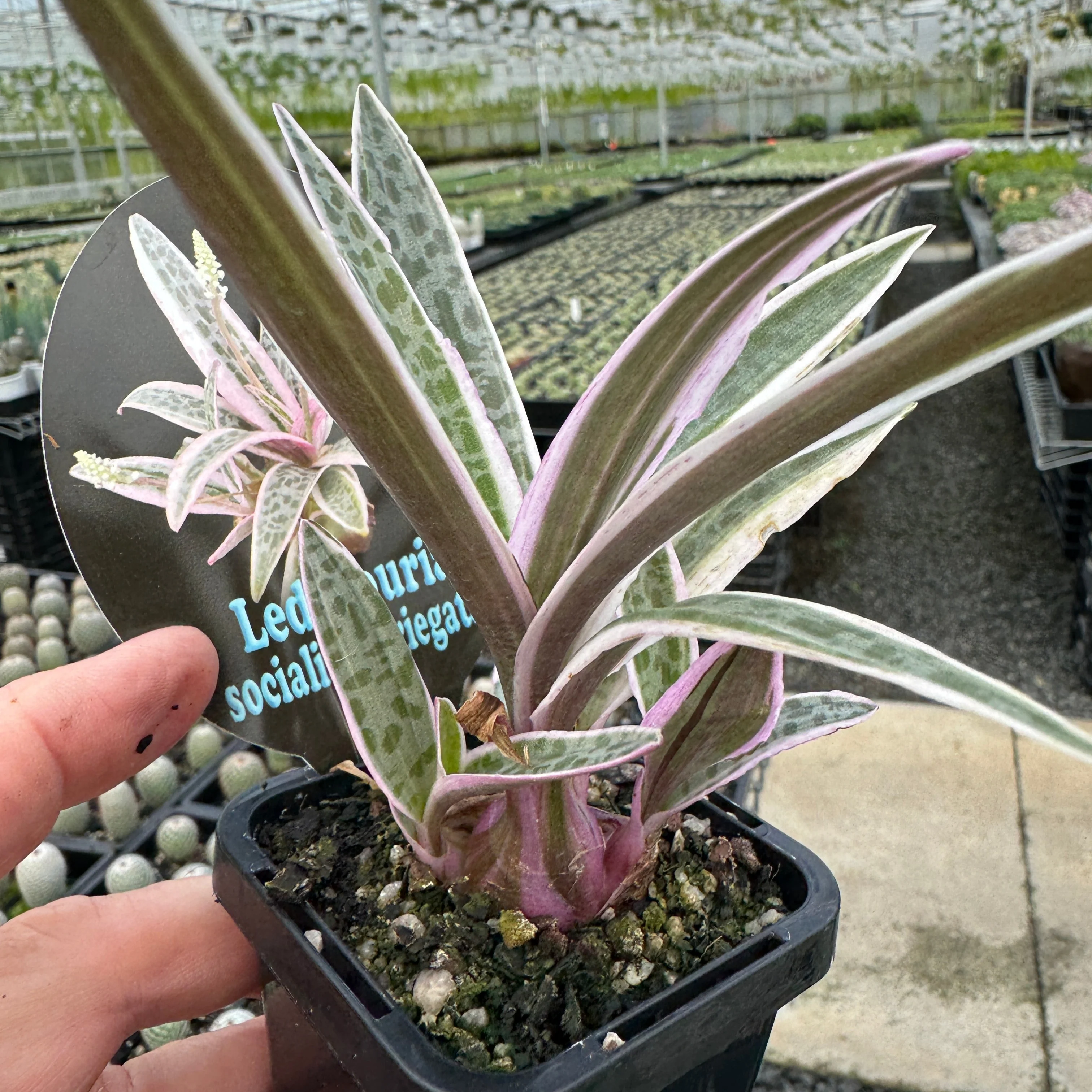
Ledebouria socialis variegata is a cultivated form of a South African bulbous species, adapted to survive in stony soils and dry woodland conditions. The species naturally produces mottled, silvery leaves, while this variegated form shows additional streaks and patches of pale cream across the foliage, making each plant visually distinct.
The bulbs are small and rounded, often sitting partly above the soil, and produce tight clumps over time. Leaves are narrow, strap-like, and arching, with markings that vary from plant to plant. The undersides are often flushed purple, adding further contrast to the variegated patterning above.
During spring and summer, slender stalks rise above the foliage, carrying many small greenish to lilac flowers. Though modest in size, these blooms contribute to the plant’s seasonal interest, while the bulbs continue to multiply, ensuring long-term persistence and dense clusters when grown in pots or shallow trays.
Care Tips:
- Light: Prefers bright light with some direct sun, which enhances leaf variegation.
- Water: Water regularly through the active season, letting the soil dry slightly before watering again. Reduce watering in winter dormancy.
- Media: Use a free-draining soil mix with added sand or grit to prevent waterlogging.
- Fertiliser: Feed with a diluted balanced fertiliser every 4–6 weeks while in active growth.
- Temperature: Best kept between 15–28 °C. Protect from frost and temperatures below 5 °C.
- Repotting: Repot every 2–3 years, dividing and replanting bulbs as clusters thicken.
Product Information
Product Information
Shipping & Returns
Shipping & Returns
Description
Ledebouria socialis variegata is a cultivated form of a South African bulbous species, adapted to survive in stony soils and dry woodland conditions. The species naturally produces mottled, silvery leaves, while this variegated form shows additional streaks and patches of pale cream across the foliage, making each plant visually distinct.
The bulbs are small and rounded, often sitting partly above the soil, and produce tight clumps over time. Leaves are narrow, strap-like, and arching, with markings that vary from plant to plant. The undersides are often flushed purple, adding further contrast to the variegated patterning above.
During spring and summer, slender stalks rise above the foliage, carrying many small greenish to lilac flowers. Though modest in size, these blooms contribute to the plant’s seasonal interest, while the bulbs continue to multiply, ensuring long-term persistence and dense clusters when grown in pots or shallow trays.
Care Tips:
- Light: Prefers bright light with some direct sun, which enhances leaf variegation.
- Water: Water regularly through the active season, letting the soil dry slightly before watering again. Reduce watering in winter dormancy.
- Media: Use a free-draining soil mix with added sand or grit to prevent waterlogging.
- Fertiliser: Feed with a diluted balanced fertiliser every 4–6 weeks while in active growth.
- Temperature: Best kept between 15–28 °C. Protect from frost and temperatures below 5 °C.
- Repotting: Repot every 2–3 years, dividing and replanting bulbs as clusters thicken.