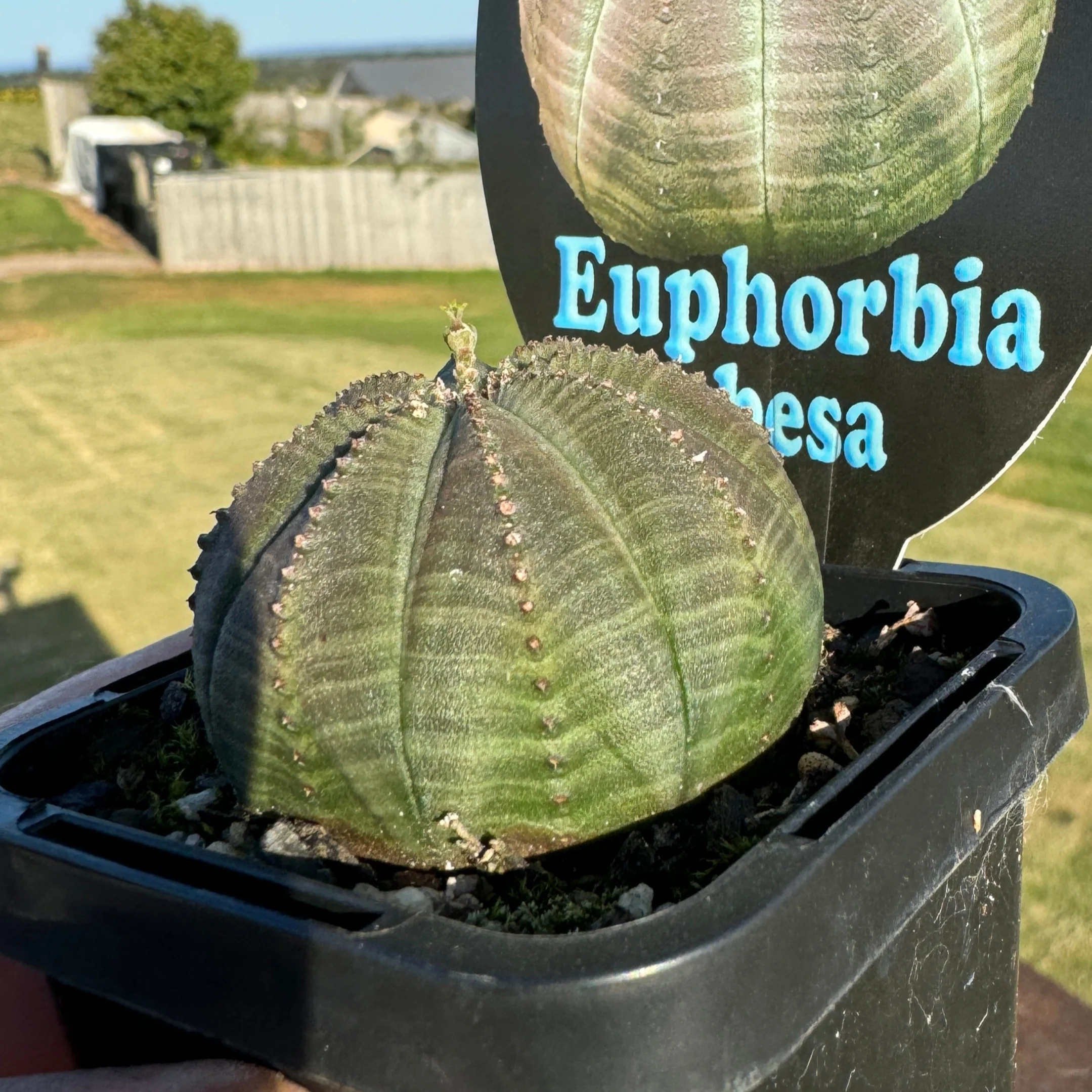
Euphorbia obesa - Baseball Plant (WA Prohibited)
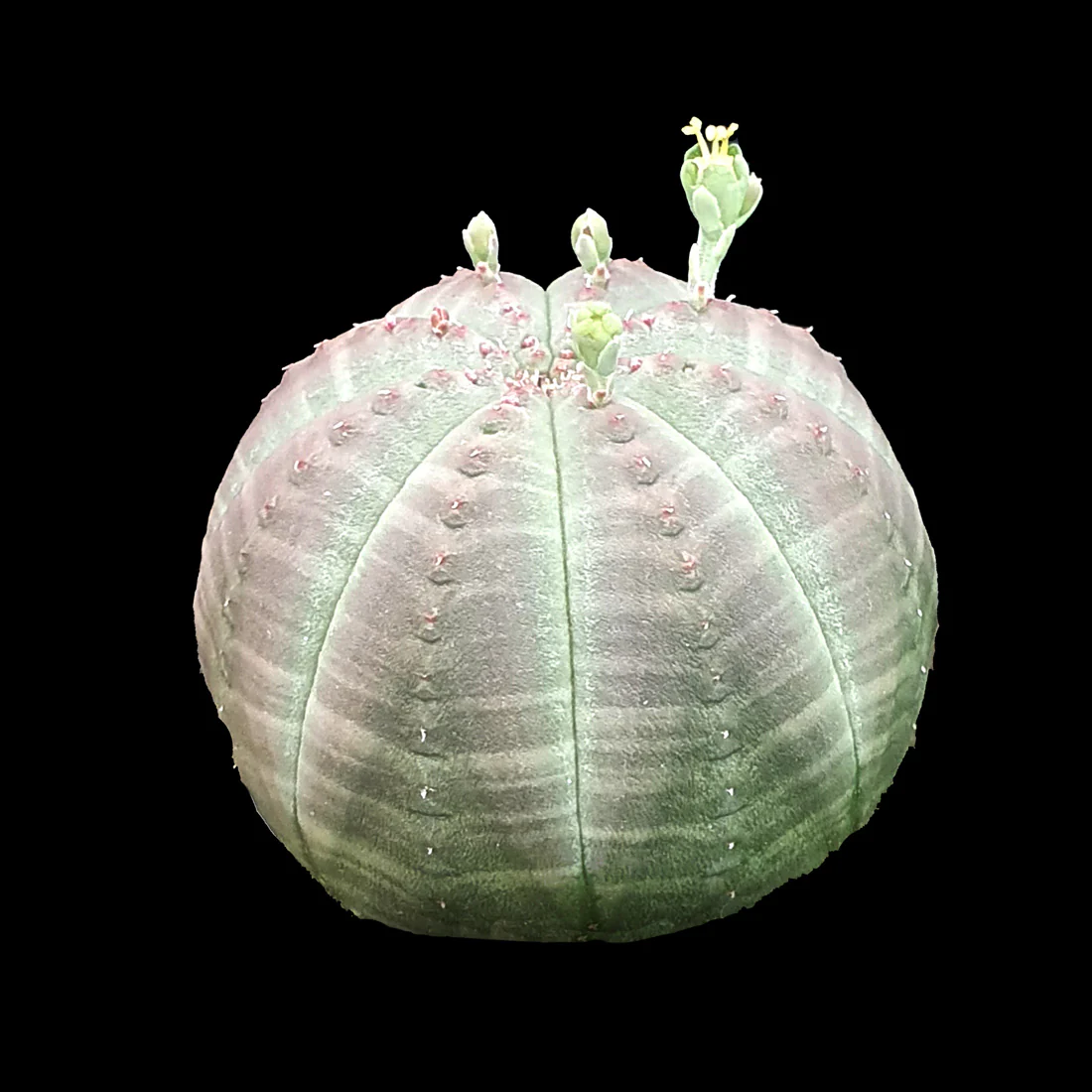
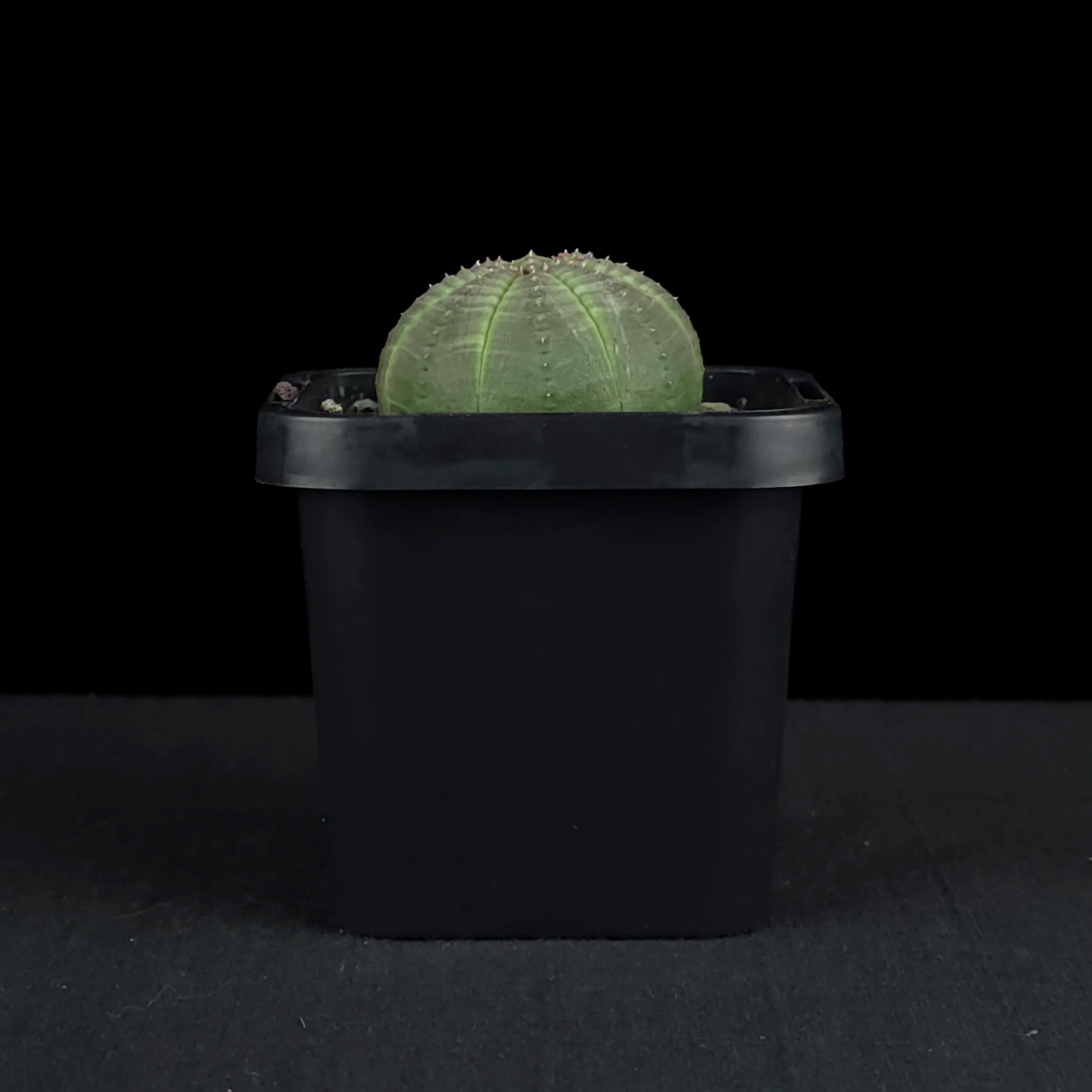
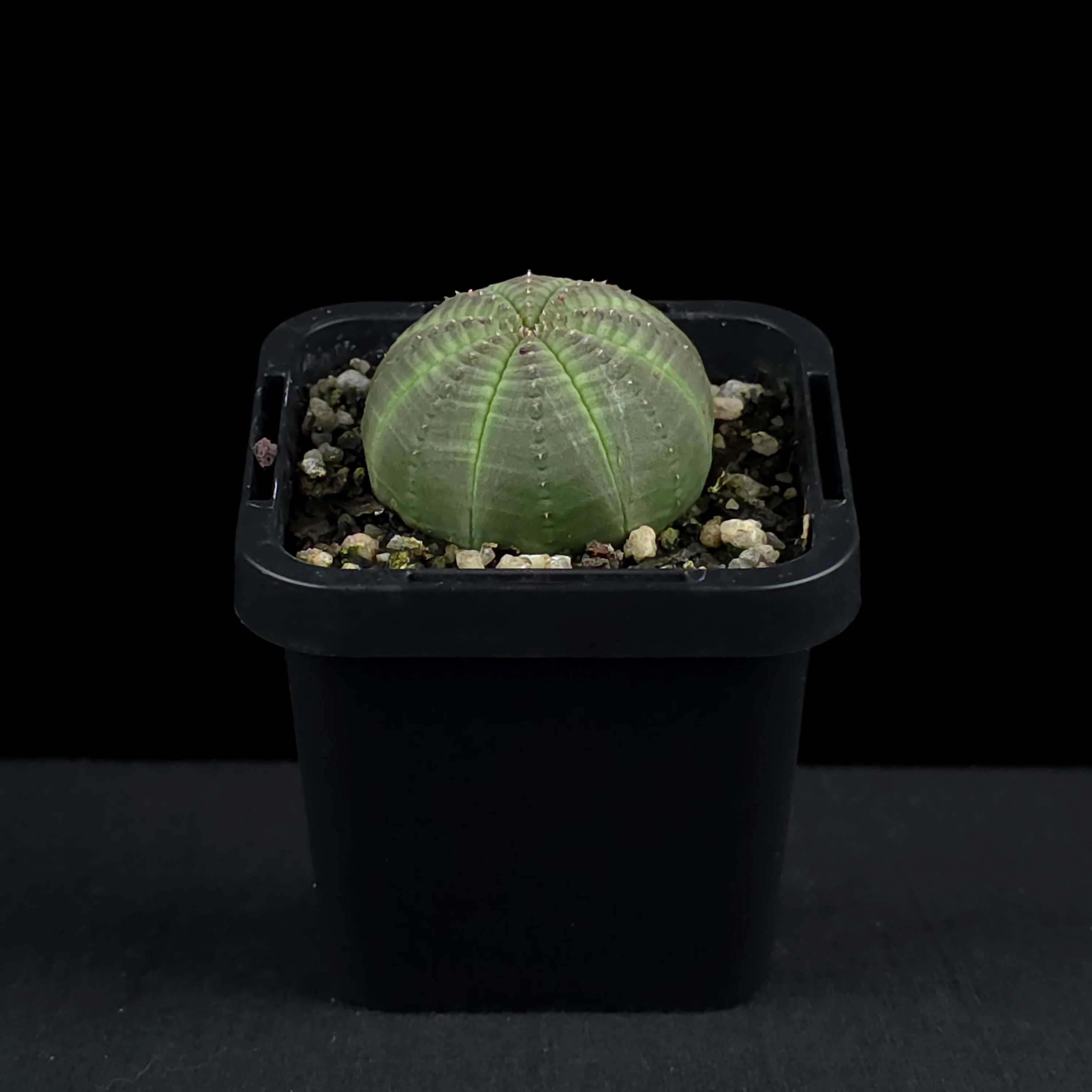
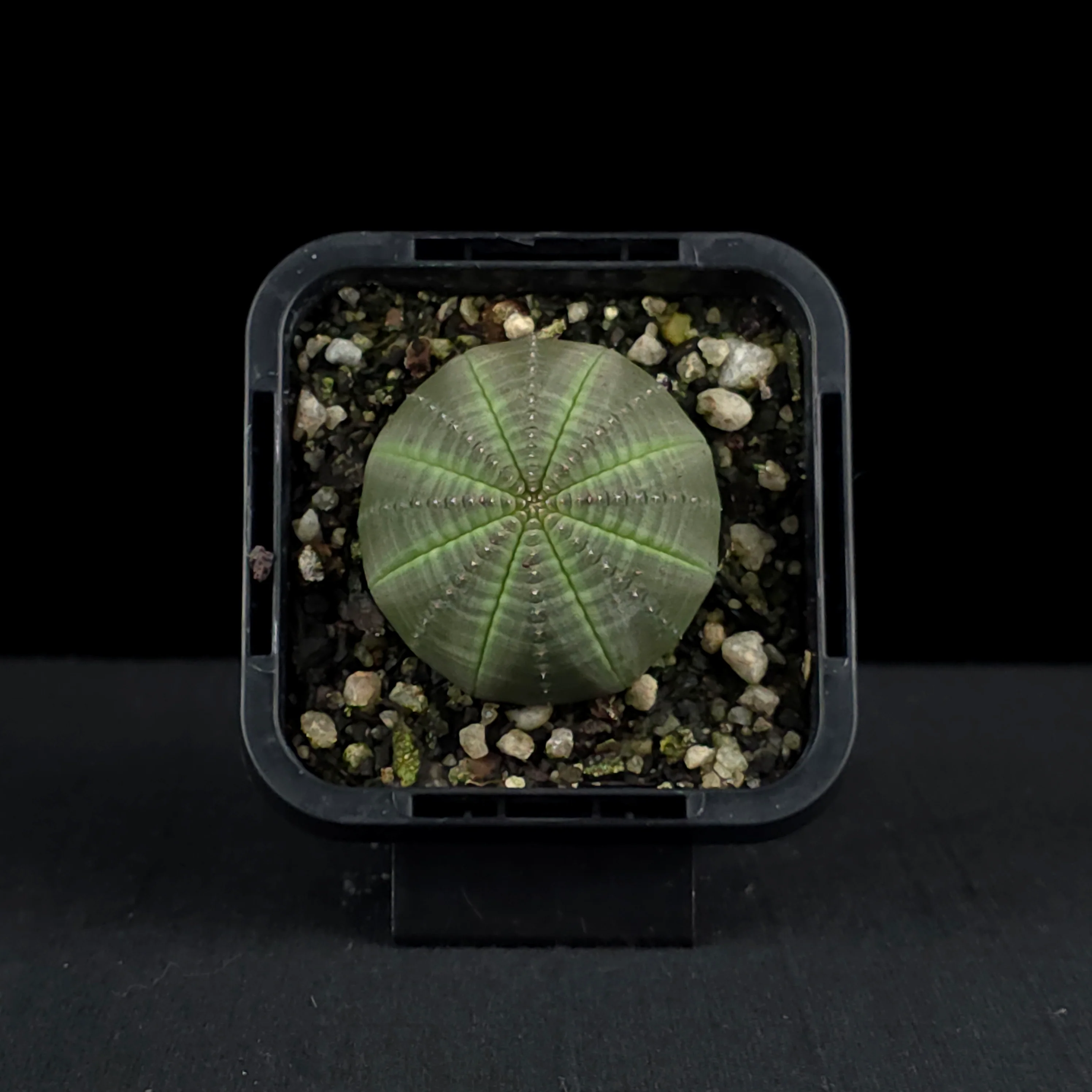
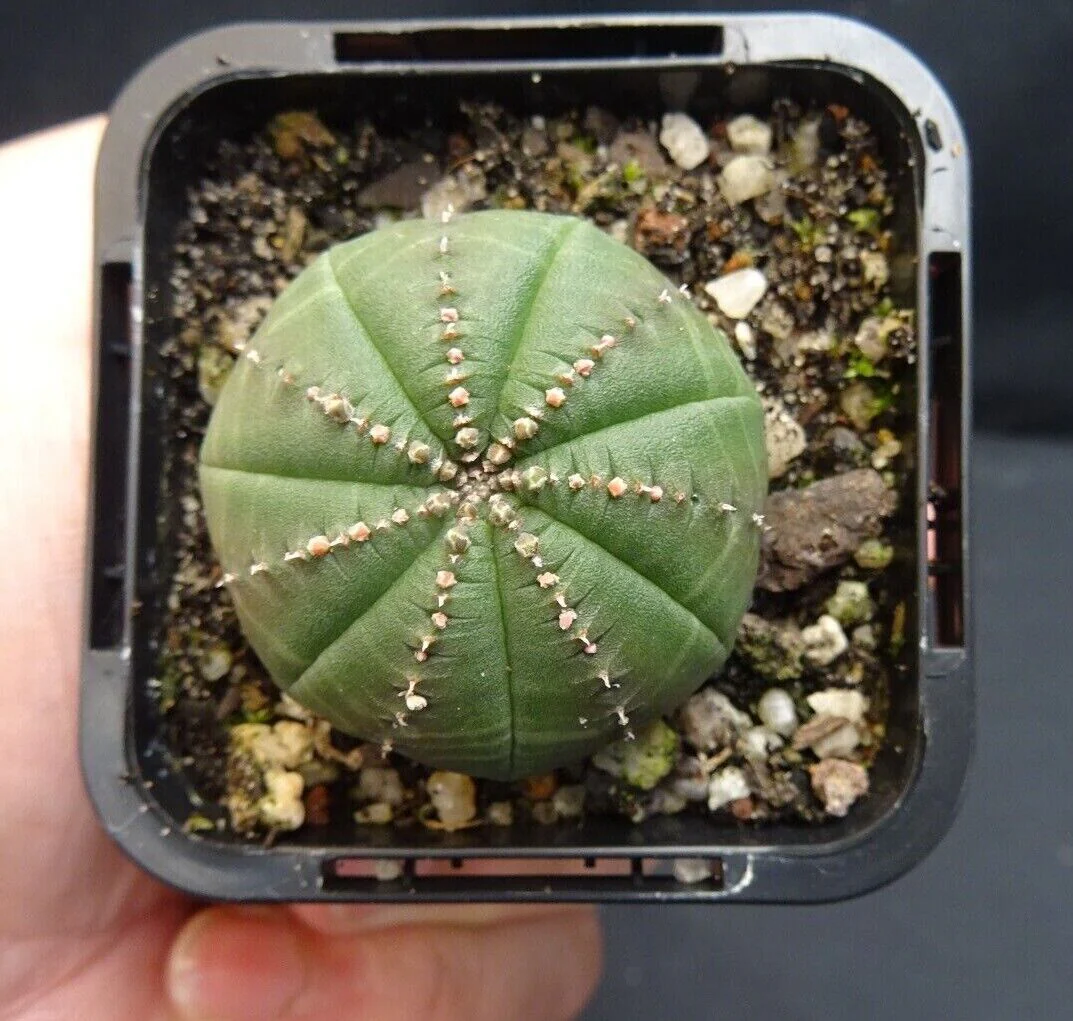
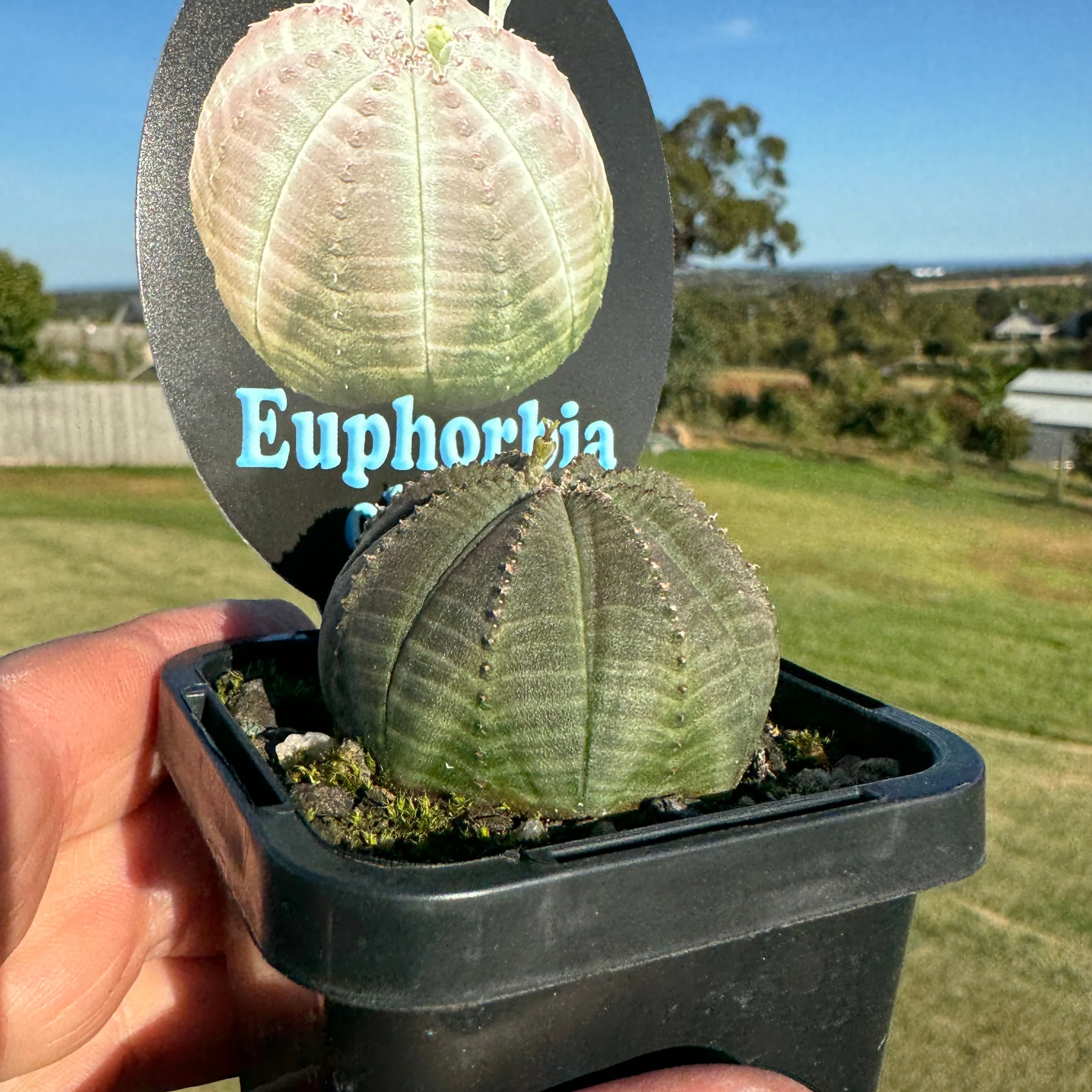
Euphorbia obesa is a globose, spineless succulent species endemic to the Great Karoo region of South Africa, where it is restricted to a small range in rocky, semi-arid terrain. It forms a solitary, ball-shaped to short-cylindrical stem, typically grey-green with faint vertical striping and occasional reddish or purplish markings under high light. The stem is divided into 8-10 shallow ribs with small, regularly spaced tubercles along the ridges. Unlike many Euphorbias, it does not produce spines. Euphorbia obesa is dioecious, meaning individual plants produce either male or female cyathia, which emerge near the stem apex during the warmer months.
Care Tips:
- Light - Requires bright light to full sun; develops best colour and shape in strong light
- Water - Water deeply but infrequently; allow soil to dry completely between waterings
- Humidity - Prefers dry air; avoid high humidity and stagnant conditions
- Media - Use a well-draining cactus mix with added grit or pumice
- Temperature - Keep above 10°C; not frost-hardy
- Fertiliser - Feed with a diluted cactus fertiliser during the growing season
- Repotting - Repot only when rootbound or when refreshing soil
Additional Notes:
- Known to be toxic
Product Information
Product Information
Shipping & Returns
Shipping & Returns
Description
Euphorbia obesa is a globose, spineless succulent species endemic to the Great Karoo region of South Africa, where it is restricted to a small range in rocky, semi-arid terrain. It forms a solitary, ball-shaped to short-cylindrical stem, typically grey-green with faint vertical striping and occasional reddish or purplish markings under high light. The stem is divided into 8-10 shallow ribs with small, regularly spaced tubercles along the ridges. Unlike many Euphorbias, it does not produce spines. Euphorbia obesa is dioecious, meaning individual plants produce either male or female cyathia, which emerge near the stem apex during the warmer months.
Care Tips:
- Light - Requires bright light to full sun; develops best colour and shape in strong light
- Water - Water deeply but infrequently; allow soil to dry completely between waterings
- Humidity - Prefers dry air; avoid high humidity and stagnant conditions
- Media - Use a well-draining cactus mix with added grit or pumice
- Temperature - Keep above 10°C; not frost-hardy
- Fertiliser - Feed with a diluted cactus fertiliser during the growing season
- Repotting - Repot only when rootbound or when refreshing soil
Additional Notes:
- Known to be toxic