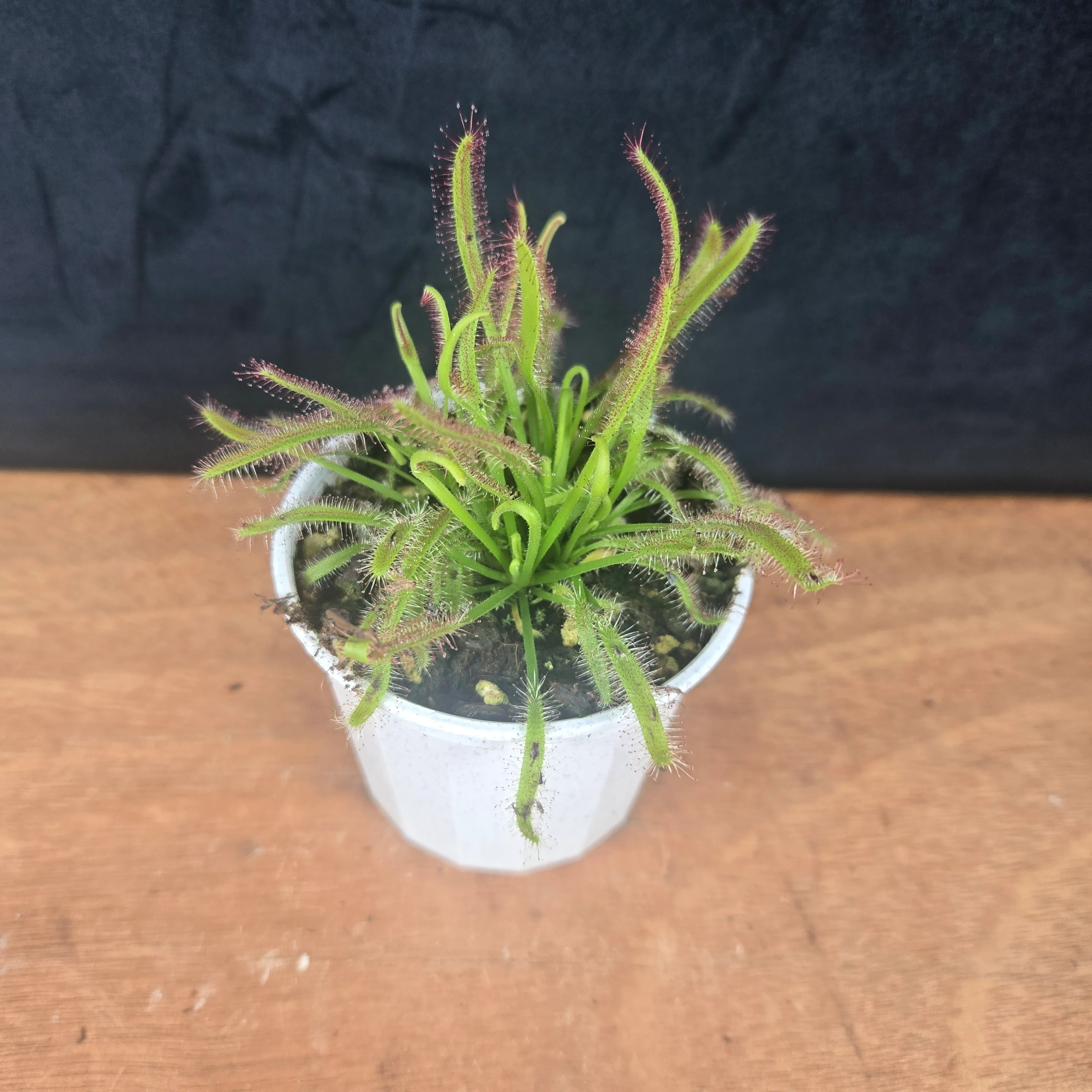
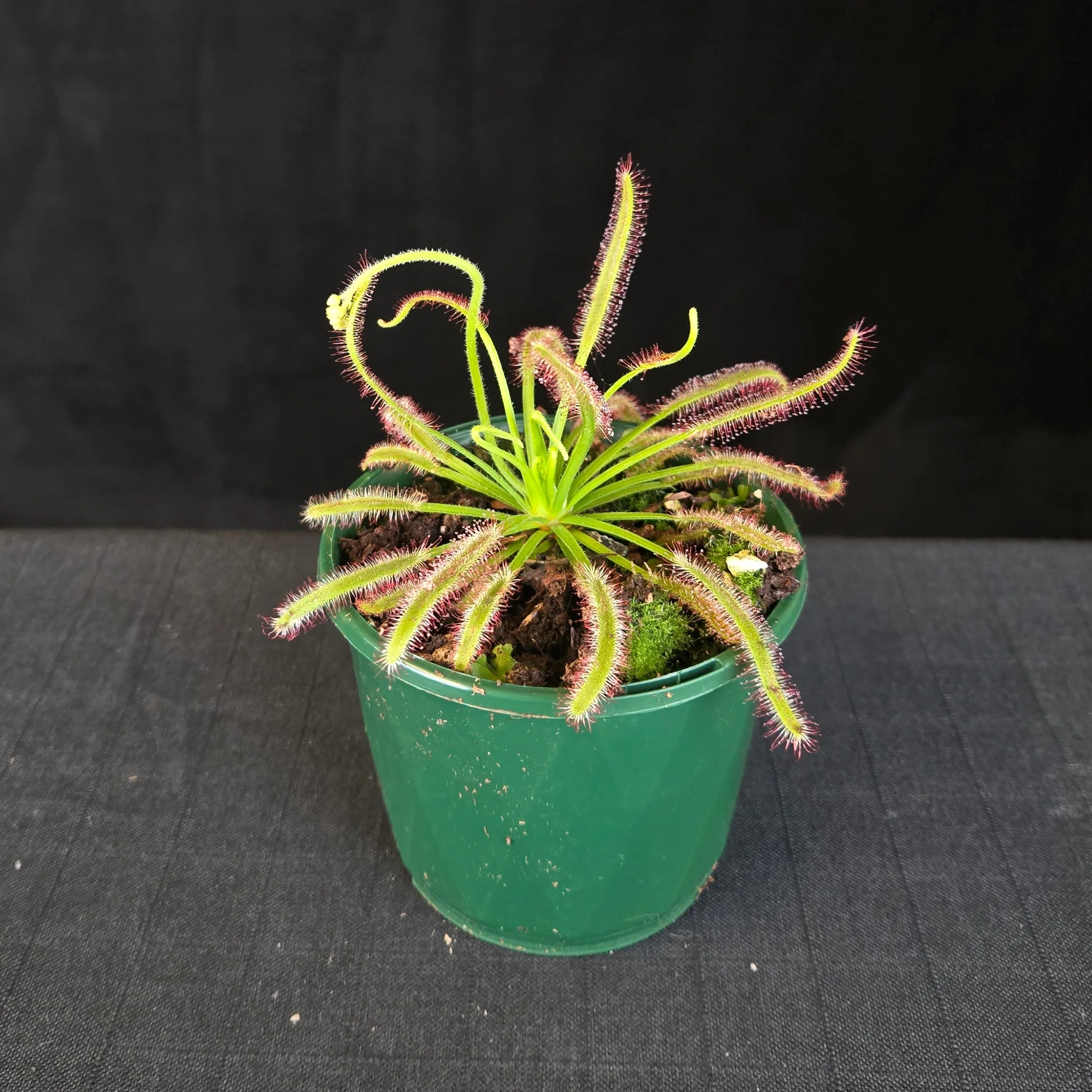
Drosera capensis
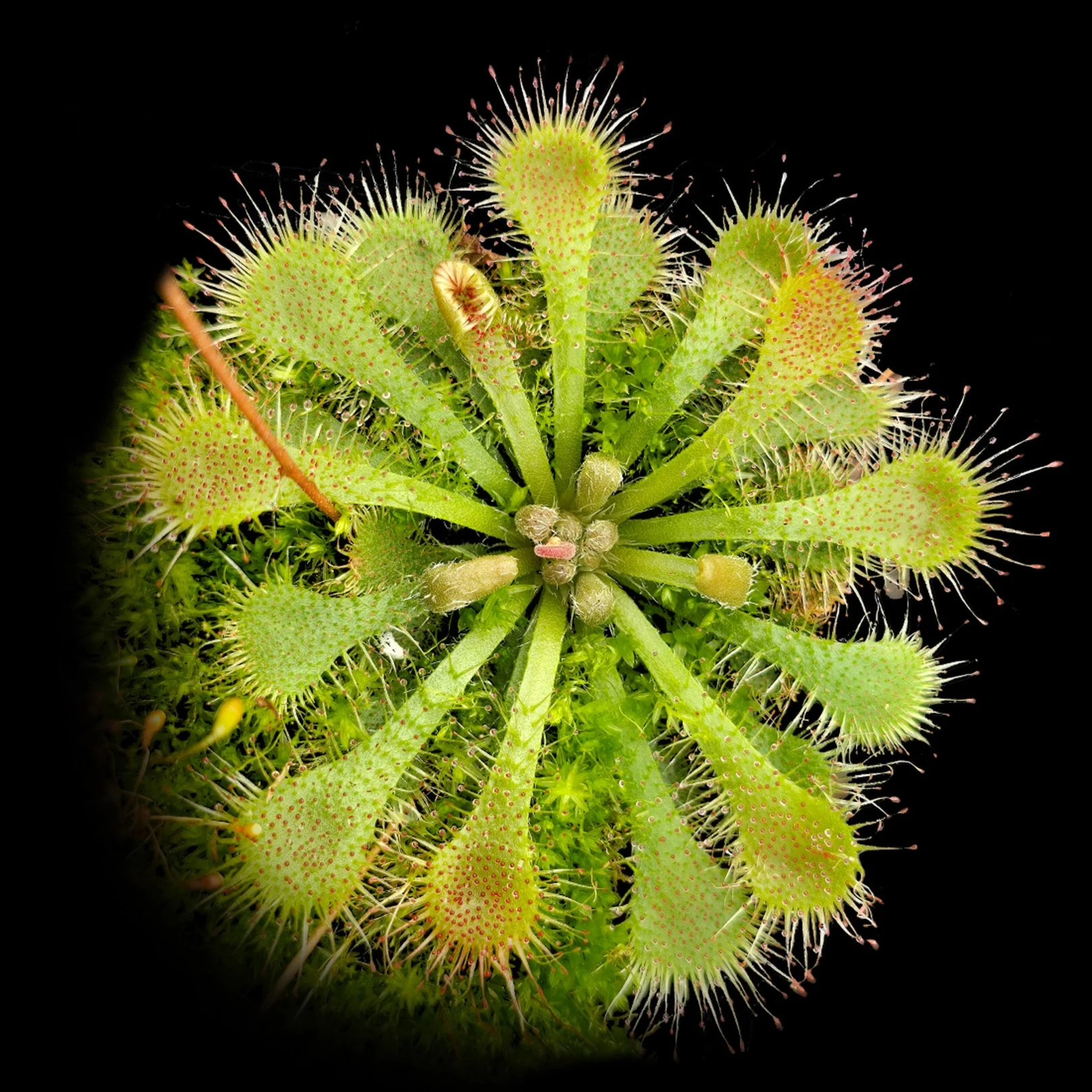
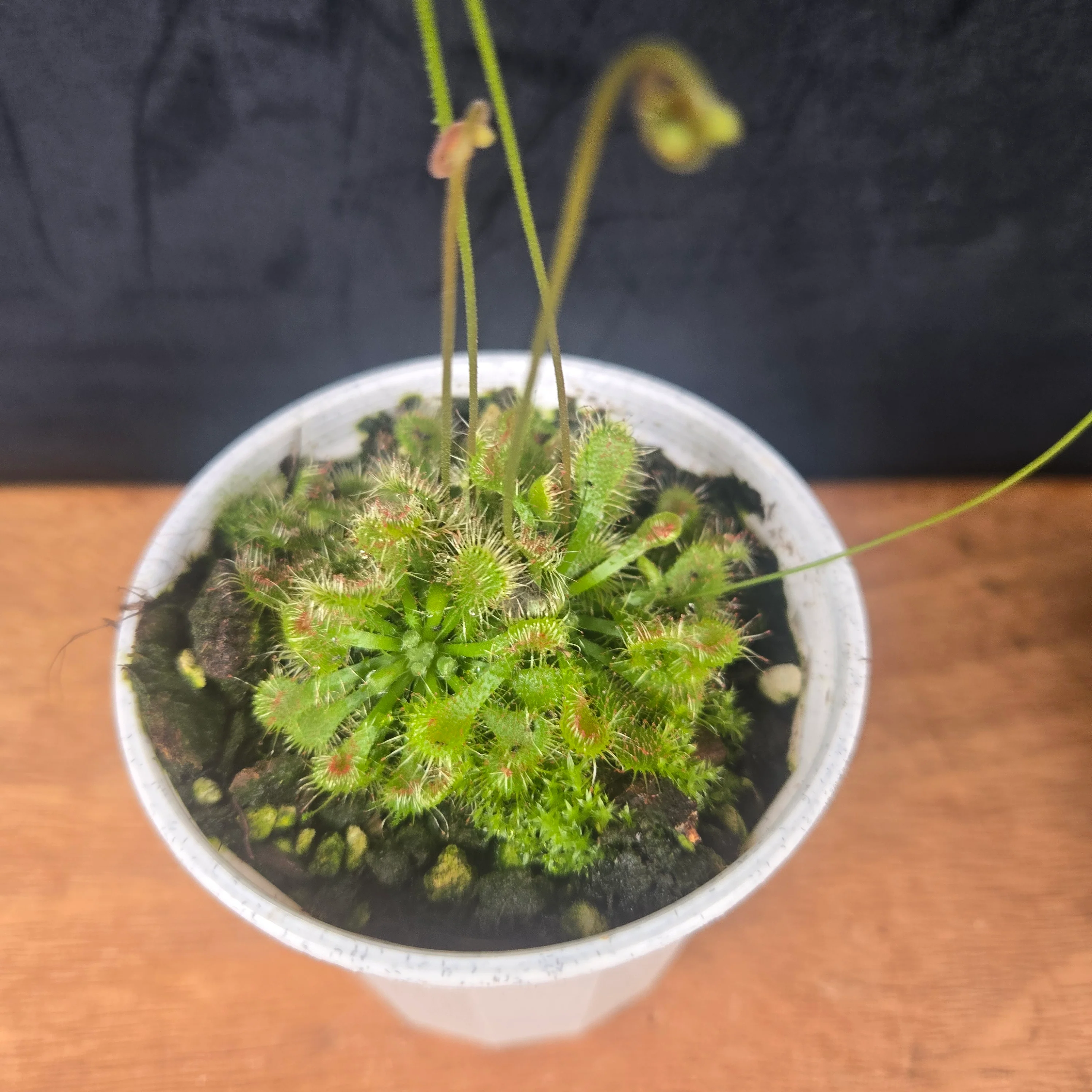
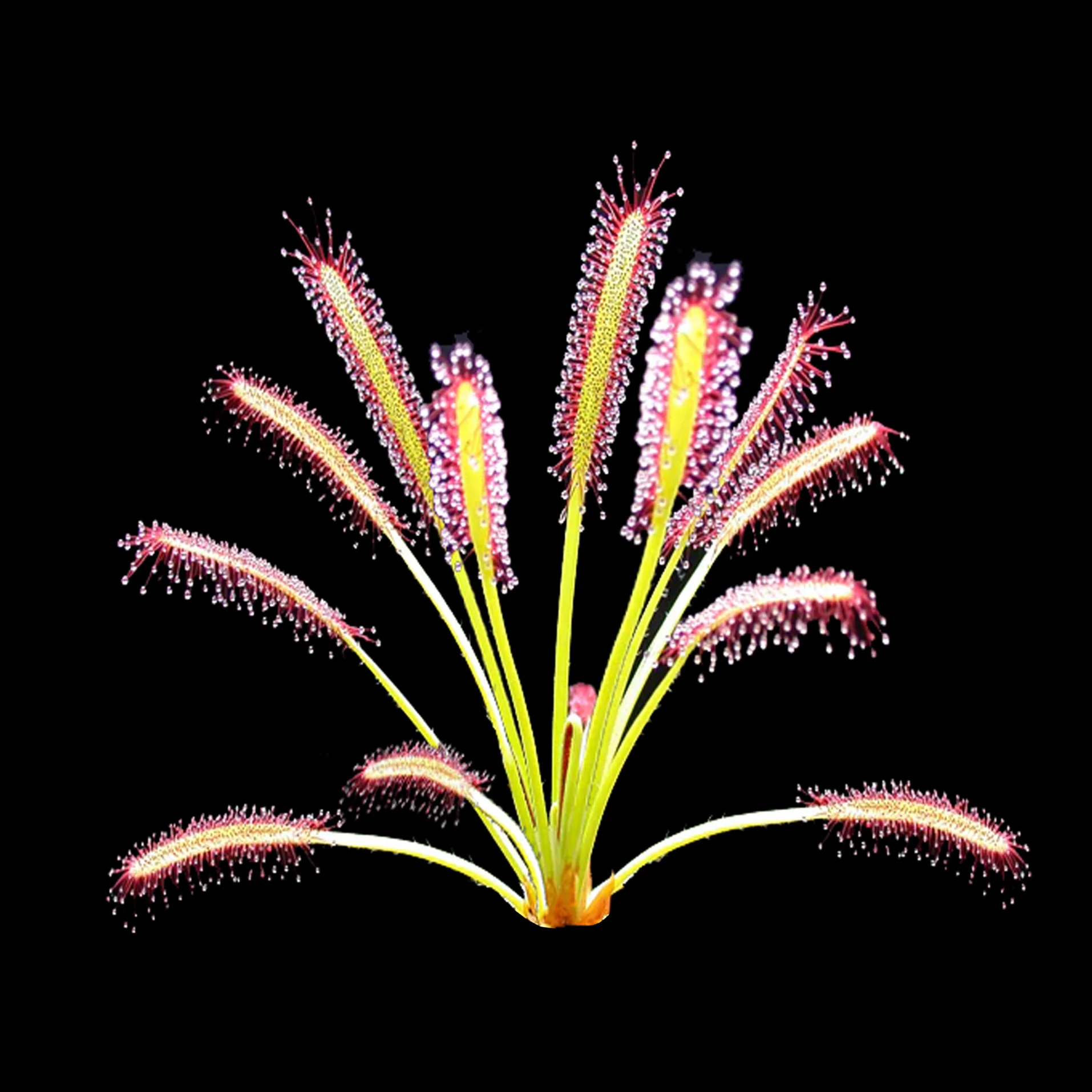
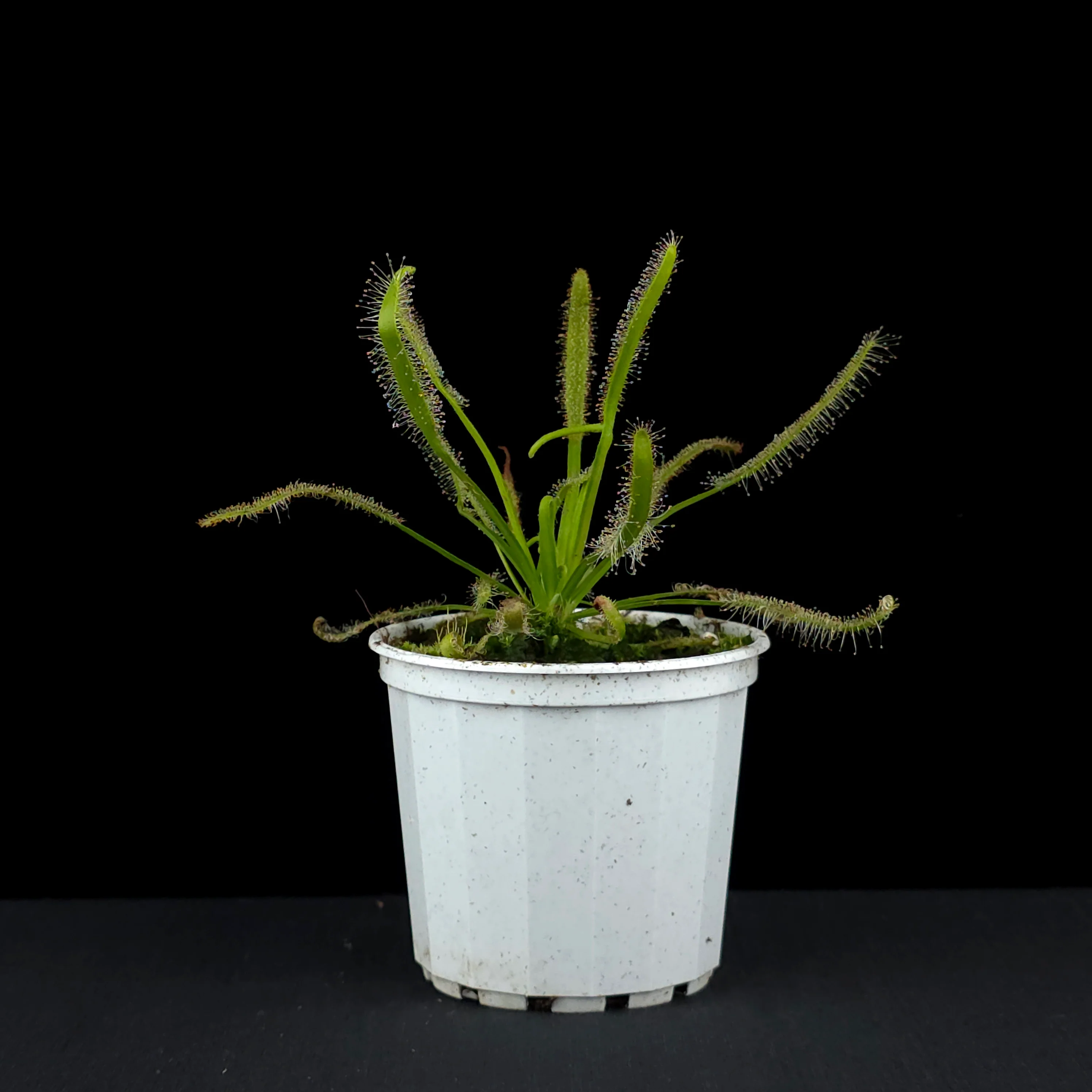
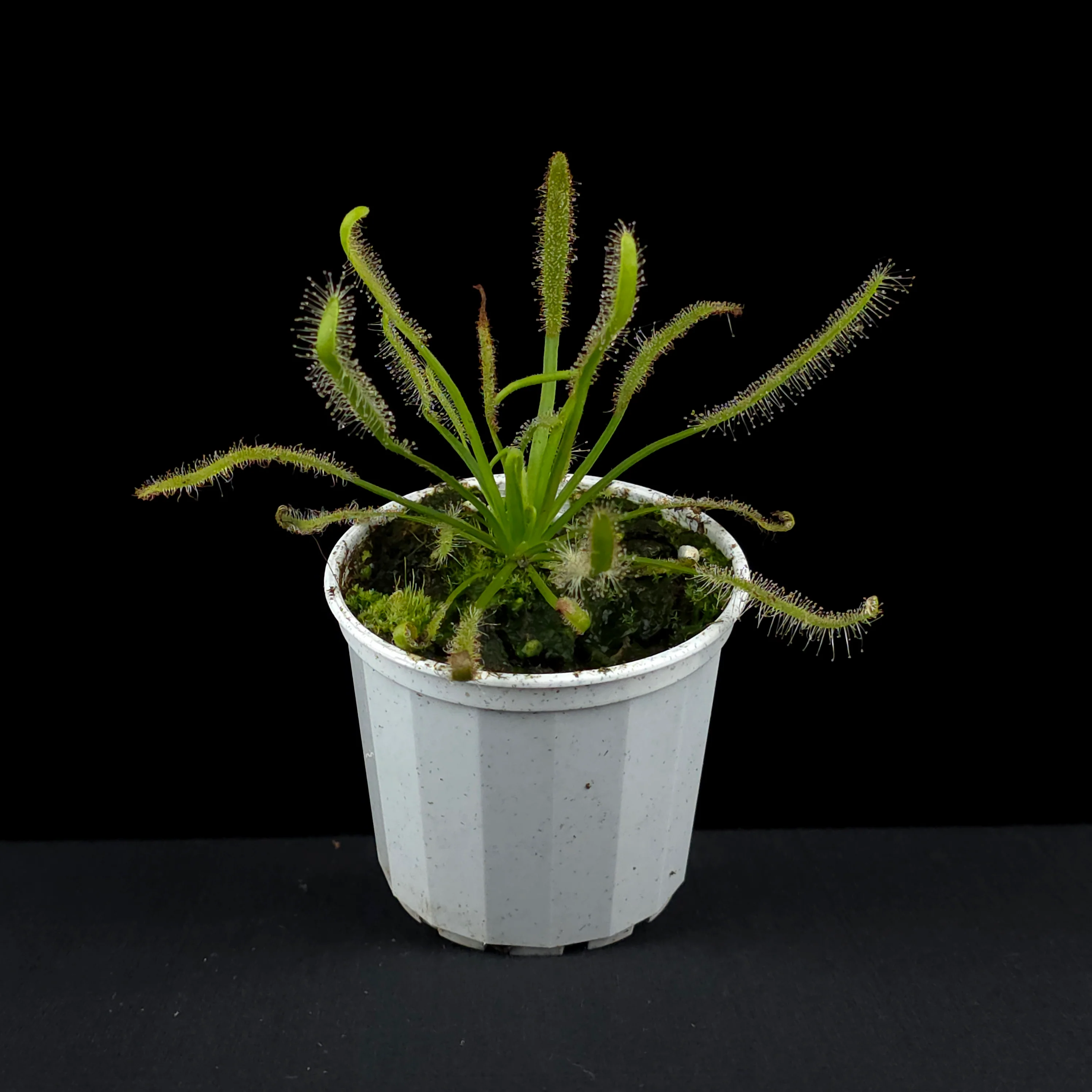
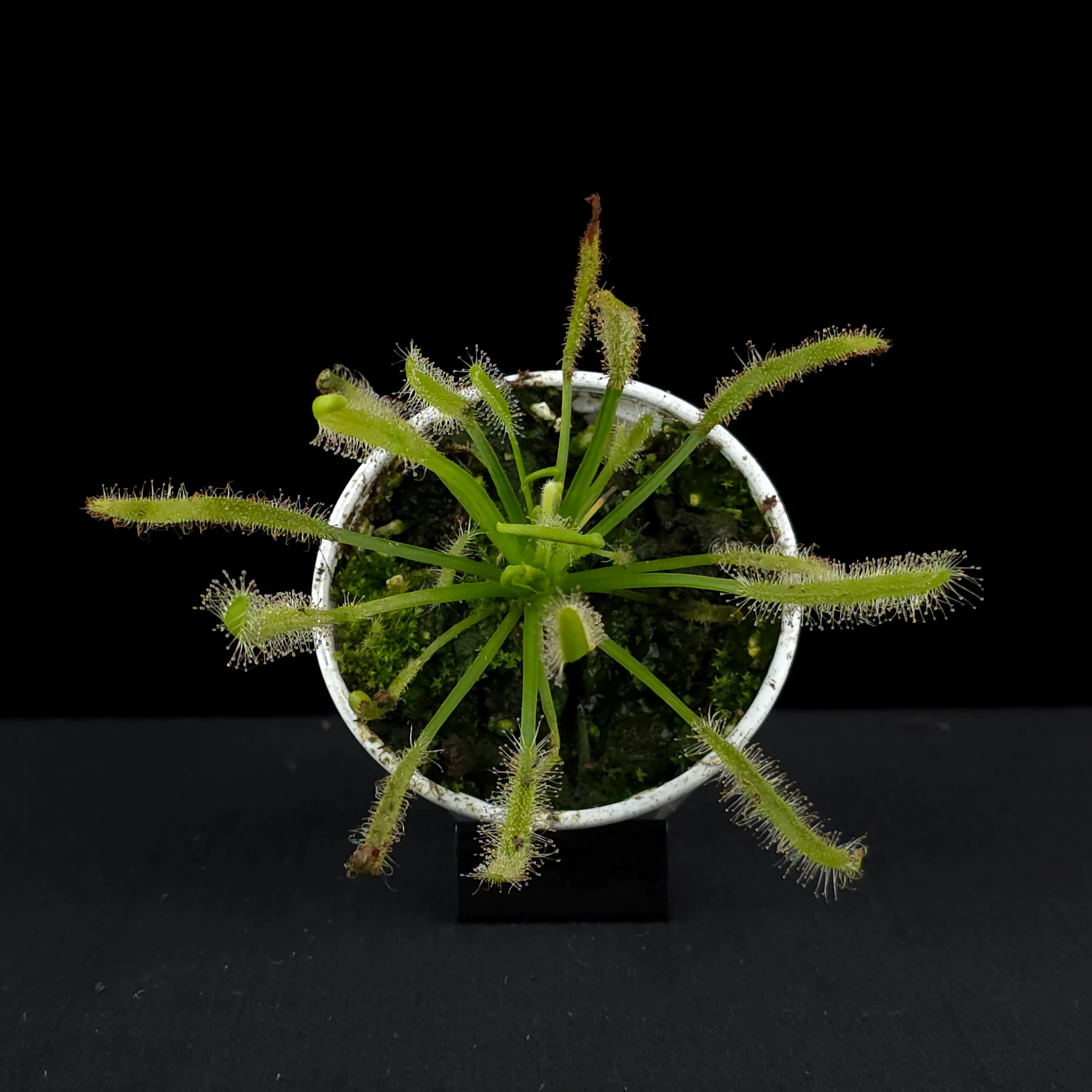
Drosera capensis, commonly known as the Cape sundew, is a charismatic carnivorous plant indigenous to the fynbos regions of South Africa. It thrives in nutrient-poor soils by capturing and digesting insects with its glistening, sticky leaves. Noted for its resilience and ease of cultivation, it is one of the most accessible carnivorous plants for enthusiasts and novices alike.
Distinctive Features
- Glandular leaves: Slender, strap-like leaves covered in tentacle-like trichomes tipped with mucilage, which glistens in sunlight and entraps small insects.
- Involute leaf curl: Leaves curl around prey once ensnared, increasing contact for digestion and nutrient absorption.
- Charming flowers: Produces elegant pink to purple blooms on tall stalks that rise above the foliage, often blooming prolifically in well-lit conditions.
Care Tips
- Light: Prefers bright, indirect sunlight to full sun; grow lights can supplement in low-light environments.
- Water: Use rainwater or distilled water; maintain consistently damp conditions using a tray method.
- Humidity: Enjoys moderate to high humidity but is tolerant of indoor conditions if watered properly.
- Media: A mix of sphagnum moss and perlite or sand; avoid fertilised or mineral-rich soils.
- Temperature: Thrives between 15–28°C; can tolerate mild drops in winter but avoid frost exposure.
- Fertiliser: Feeding is unnecessary; it gains nutrients from captured insects. Do not use traditional fertilisers.
- Repotting: Repot every 1–2 years to refresh media; best done in early spring before active growth resumes.
Original: $12.50
-70%$12.50
$3.75Product Information
Product Information
Shipping & Returns
Shipping & Returns
Description
Drosera capensis, commonly known as the Cape sundew, is a charismatic carnivorous plant indigenous to the fynbos regions of South Africa. It thrives in nutrient-poor soils by capturing and digesting insects with its glistening, sticky leaves. Noted for its resilience and ease of cultivation, it is one of the most accessible carnivorous plants for enthusiasts and novices alike.
Distinctive Features
- Glandular leaves: Slender, strap-like leaves covered in tentacle-like trichomes tipped with mucilage, which glistens in sunlight and entraps small insects.
- Involute leaf curl: Leaves curl around prey once ensnared, increasing contact for digestion and nutrient absorption.
- Charming flowers: Produces elegant pink to purple blooms on tall stalks that rise above the foliage, often blooming prolifically in well-lit conditions.
Care Tips
- Light: Prefers bright, indirect sunlight to full sun; grow lights can supplement in low-light environments.
- Water: Use rainwater or distilled water; maintain consistently damp conditions using a tray method.
- Humidity: Enjoys moderate to high humidity but is tolerant of indoor conditions if watered properly.
- Media: A mix of sphagnum moss and perlite or sand; avoid fertilised or mineral-rich soils.
- Temperature: Thrives between 15–28°C; can tolerate mild drops in winter but avoid frost exposure.
- Fertiliser: Feeding is unnecessary; it gains nutrients from captured insects. Do not use traditional fertilisers.
- Repotting: Repot every 1–2 years to refresh media; best done in early spring before active growth resumes.