

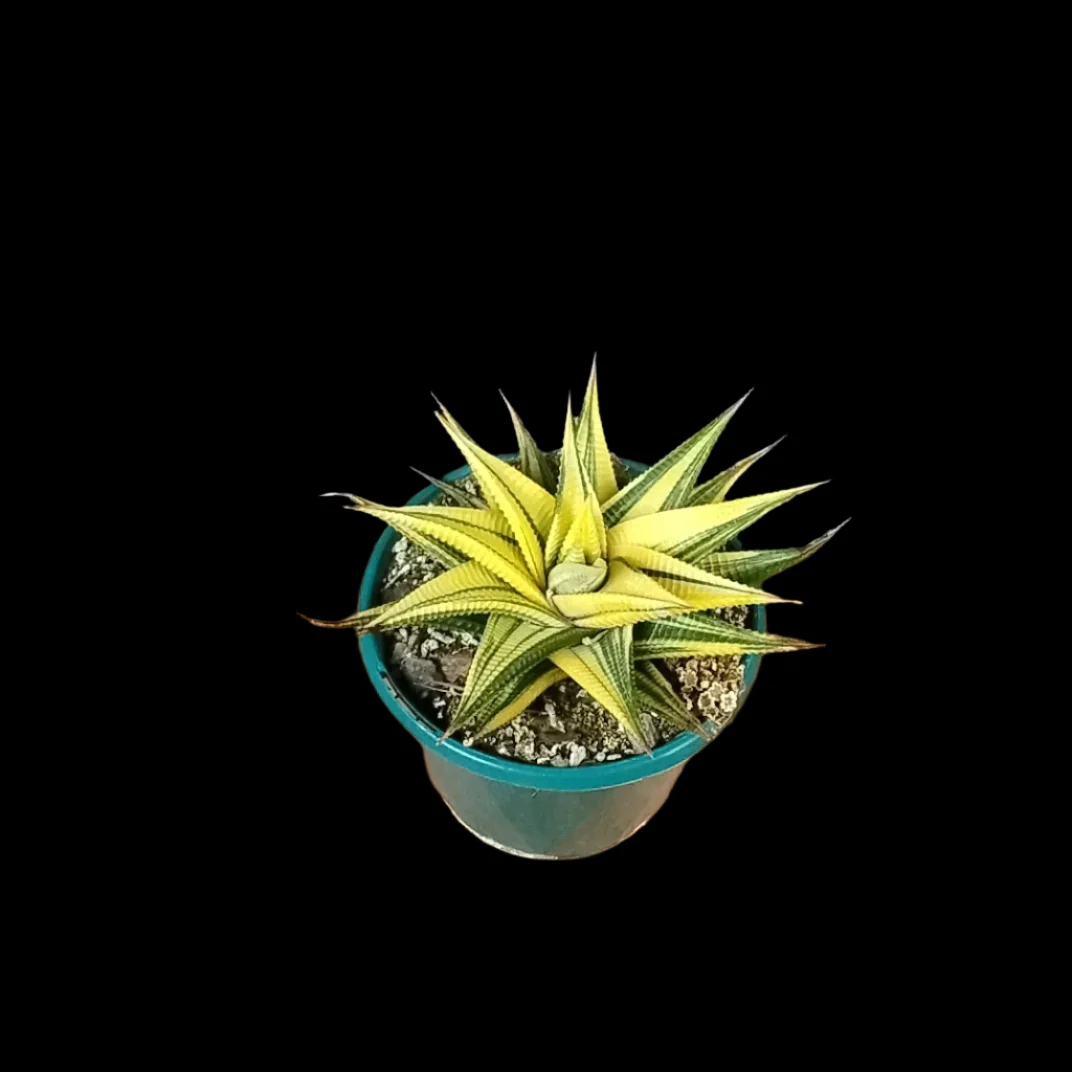
Haworthia limifolia variegata
Haworthia limifolia variegata belongs to a species that is native to South Africa, Mozambique, and Eswatini, where plants are often found tucked into sandy or rocky soils beneath sparse bush cover. In the wild, Haworthia limifolia uses its ridged leaves and compact rosette to shield itself from desiccation, storing water within its tissues to endure long dry spells and surviving partly shaded by surrounding vegetation.
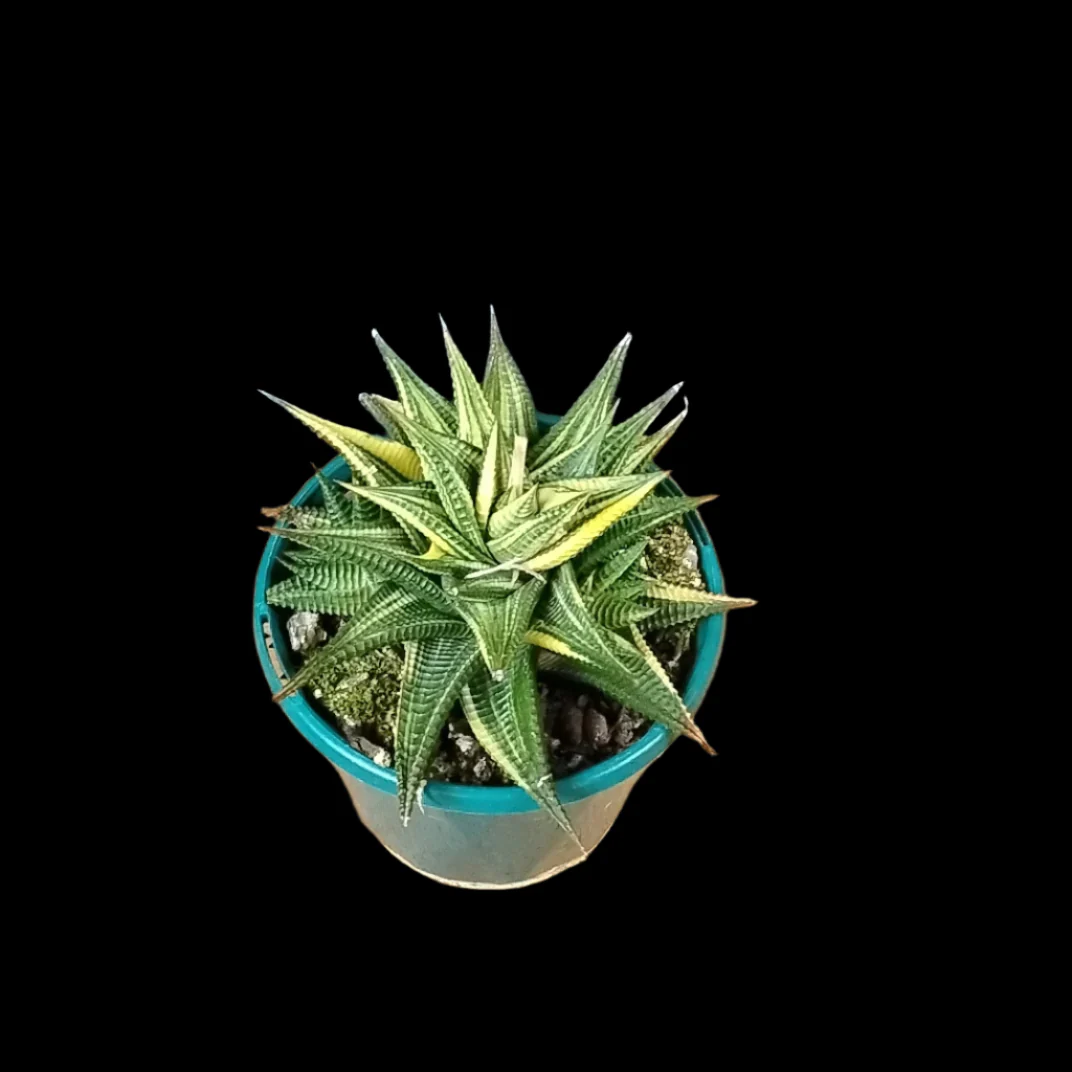
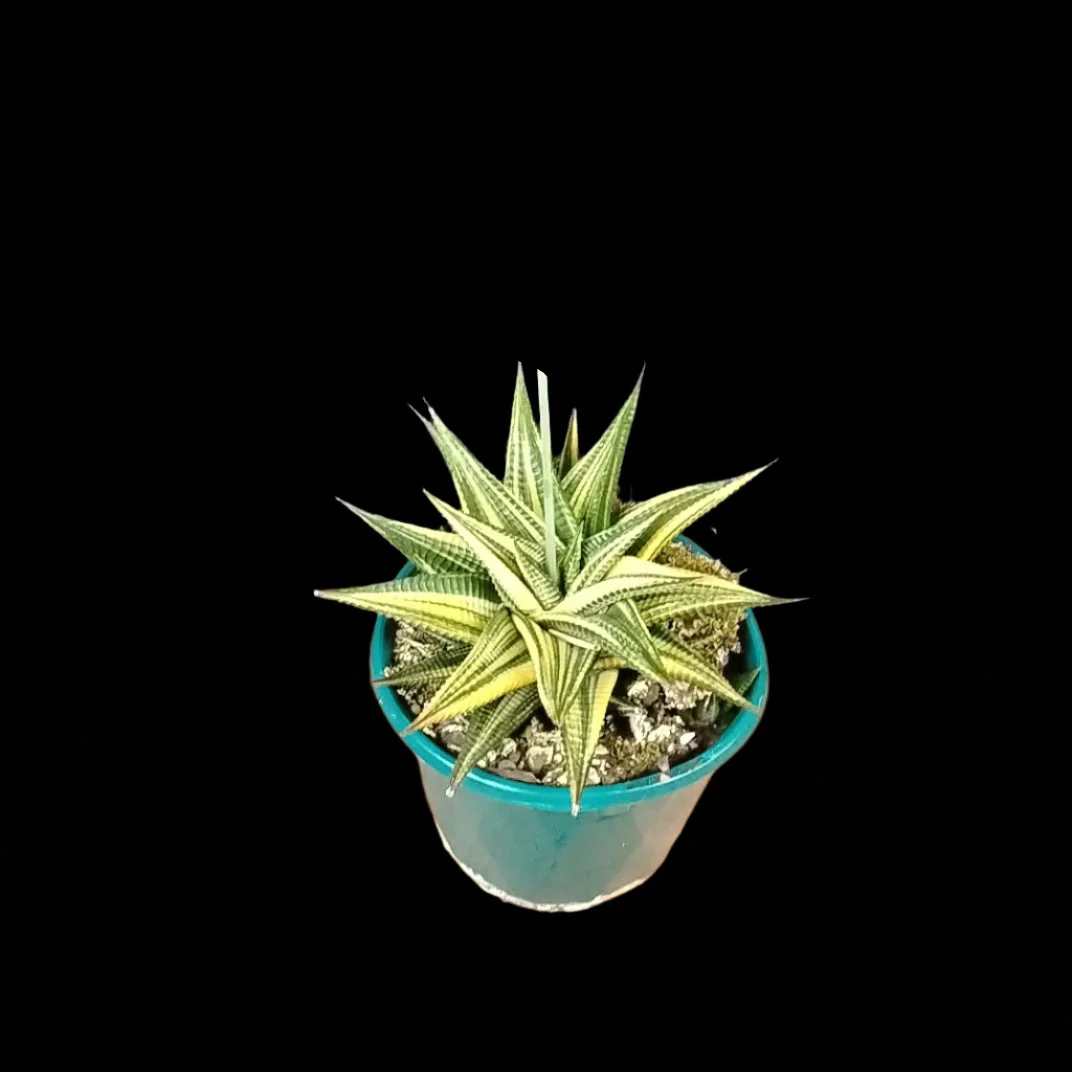
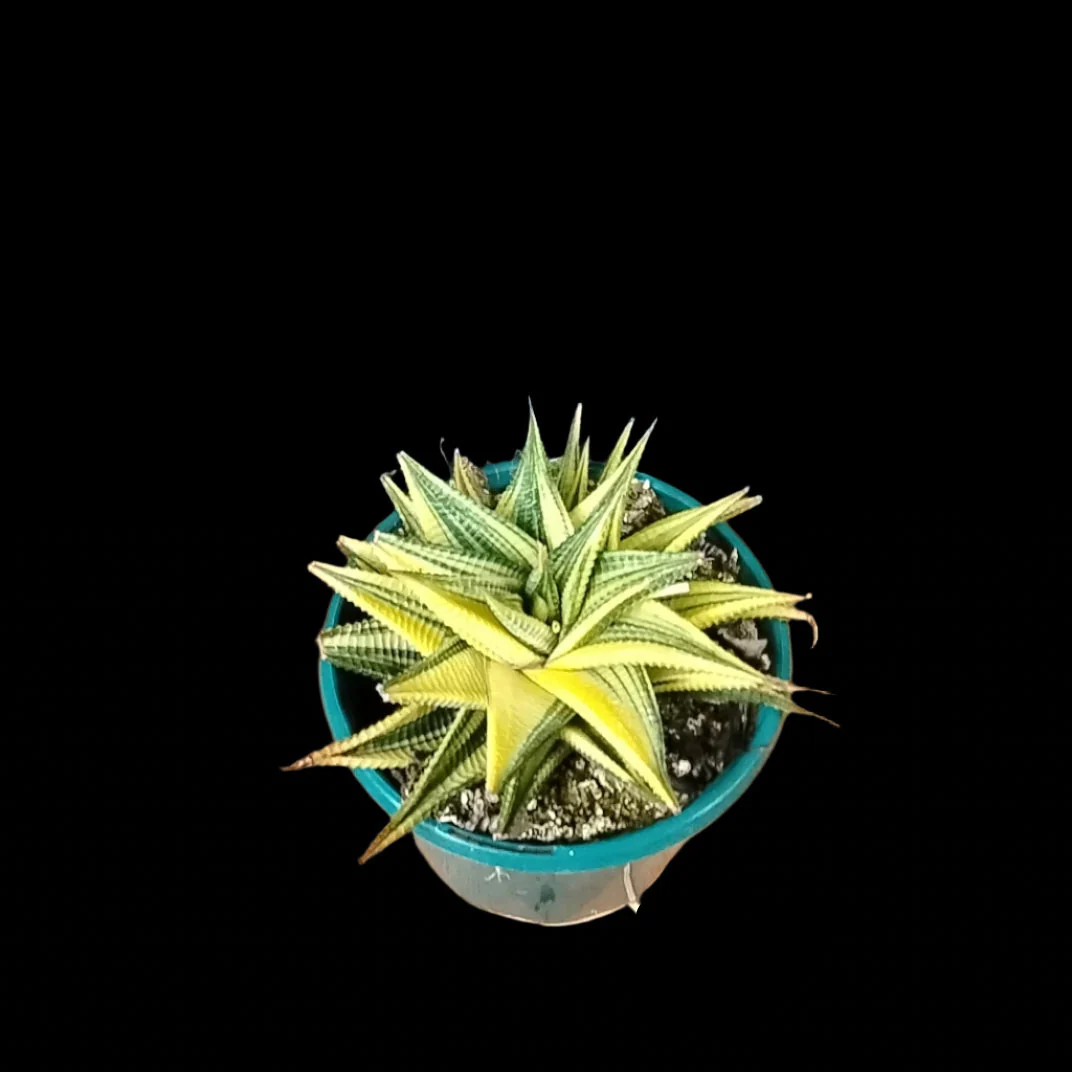
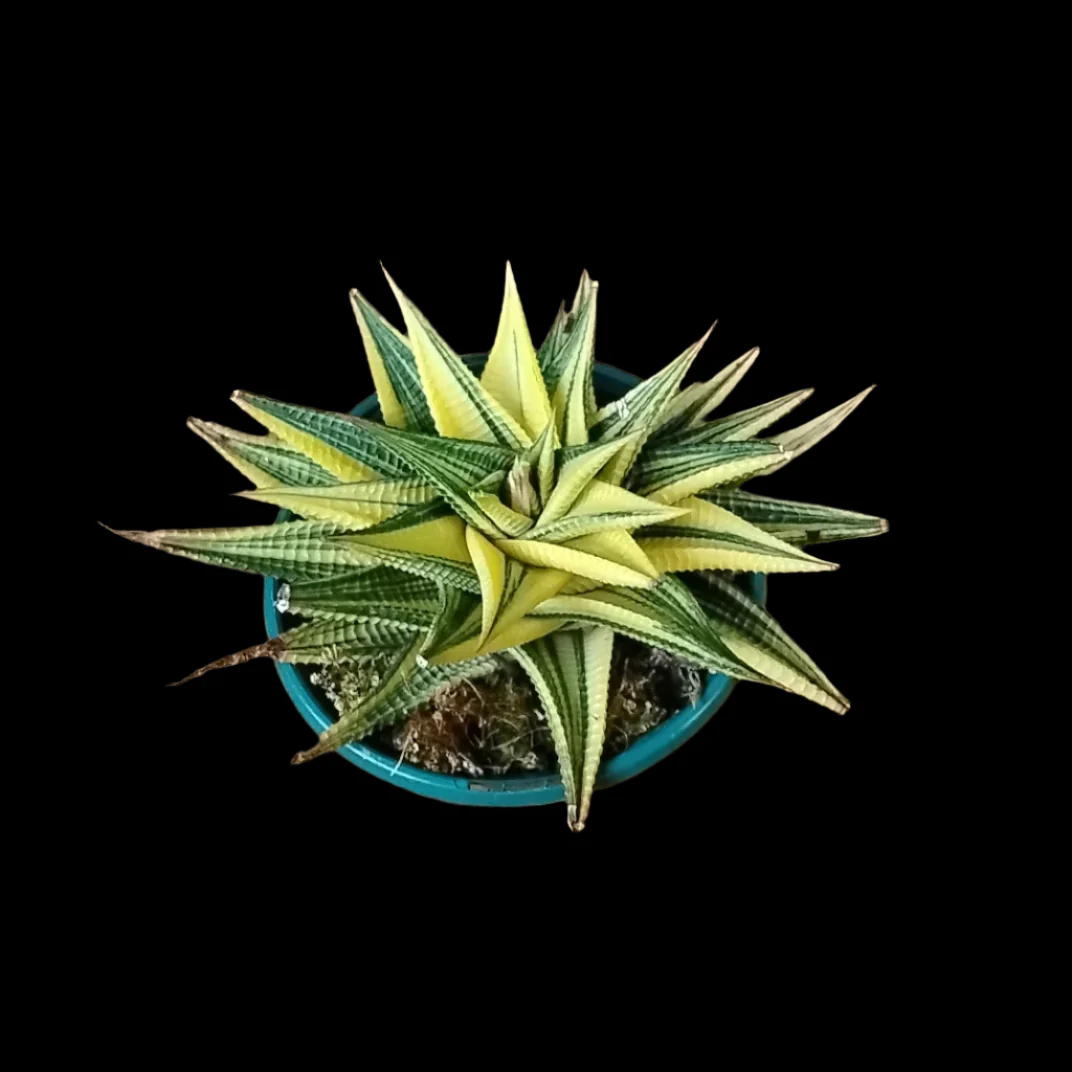
In cultivation, this variegated selection shows pale streaks across its ridged triangular leaves, but what makes the plant interesting lies beyond its appearance. The spiral rosette form of Haworthia limifolia has long been considered unusual among Haworthias, as the arrangement is more often associated with unrelated succulent groups. This spiral pattern aids in capturing rainfall and channelling it towards the centre of the rosette, directing moisture towards the roots in its native, erratic-rainfall environment.
Flowering occurs on wiry inflorescences that rise well above the leaves, usually during the warmer months. The small, white, tubular blooms are modest in scale but are important for reproduction in the wild, offering nectar guides to tiny pollinating insects. While grown primarily for its unusual foliage, the plant’s flowering cycle is a reminder of its adaptation to seasonal rhythms in southern Africa’s climate.
Care Tips
- Light: Thrives in bright, indirect light. Tolerates some direct sun but can scorch under intense midday rays.
- Water: Water sparingly, allowing the soil to fully dry out between waterings. Very sensitive to overwatering.
- Humidity: Prefers drier air; average indoor humidity is sufficient.
- Media: Use a well-draining succulent mix with added grit or perlite to avoid root rot.
- Temperature: Ideal range is 18–26°C. Protect from frost and prolonged exposure below 10°C.
- Fertiliser: Apply a diluted, balanced fertiliser once monthly during active growth in spring and summer.
- Repotting: Repot every 2–3 years or when rootbound. Choose a shallow pot with ample drainage.
Original: $90.00
-70%$90.00
$27.00Product Information
Product Information
Shipping & Returns
Shipping & Returns
Description
Haworthia limifolia variegata belongs to a species that is native to South Africa, Mozambique, and Eswatini, where plants are often found tucked into sandy or rocky soils beneath sparse bush cover. In the wild, Haworthia limifolia uses its ridged leaves and compact rosette to shield itself from desiccation, storing water within its tissues to endure long dry spells and surviving partly shaded by surrounding vegetation.
In cultivation, this variegated selection shows pale streaks across its ridged triangular leaves, but what makes the plant interesting lies beyond its appearance. The spiral rosette form of Haworthia limifolia has long been considered unusual among Haworthias, as the arrangement is more often associated with unrelated succulent groups. This spiral pattern aids in capturing rainfall and channelling it towards the centre of the rosette, directing moisture towards the roots in its native, erratic-rainfall environment.
Flowering occurs on wiry inflorescences that rise well above the leaves, usually during the warmer months. The small, white, tubular blooms are modest in scale but are important for reproduction in the wild, offering nectar guides to tiny pollinating insects. While grown primarily for its unusual foliage, the plant’s flowering cycle is a reminder of its adaptation to seasonal rhythms in southern Africa’s climate.
Care Tips
- Light: Thrives in bright, indirect light. Tolerates some direct sun but can scorch under intense midday rays.
- Water: Water sparingly, allowing the soil to fully dry out between waterings. Very sensitive to overwatering.
- Humidity: Prefers drier air; average indoor humidity is sufficient.
- Media: Use a well-draining succulent mix with added grit or perlite to avoid root rot.
- Temperature: Ideal range is 18–26°C. Protect from frost and prolonged exposure below 10°C.
- Fertiliser: Apply a diluted, balanced fertiliser once monthly during active growth in spring and summer.
- Repotting: Repot every 2–3 years or when rootbound. Choose a shallow pot with ample drainage.